

Writing Process

On Writing ‘n the Writers
In his savage state, mere sounds could have been man’s communicative tools to vent out his raw feelings, limited to such as hunger and anger and pain and pleasure. However, in time, as he managed to civilize himself in communes, he would have needed some vocabulary to synchronize the habitation therein. And in that lies the seeds of the tongues, which, when whetted by the tenor of the times, could have yielded the fruits of languages. But it was the character of life, as it evolved in a given commune that would have shaped the nuances of the words, leading to the evolution of languages with their unique characteristics of expression in personal interactions and public communions. While at some point, while it was the script that gave substance to the tongue, it was the word of mouth that incentivized the flowering of the art of expression. However, it was the advent of the printed word that turned out to be a boon as well as the bane of man’s art of arts.
Any writing, like speaking, has personal as well as impersonal character to it; whereas in letters, the personal tone acquires an emotive character, the impersonal tenor of stage plays, and such public endeavours, imbibes the force of opinion making. Inevitably, this innate ability of language to influence the listener / reader, besides catering to the vanity of the speaker / writer, makes it prone for abuse by man. Maybe, it’s the inkling of the dangers of demagogy that makes nature to ensure that the oratorical skills are in short supply for man. But in our ‘media era’, as the vanity of the rightly-connected gets fulfilled by way of seeing ‘one’s name in print’, the writing became a victim. Needless to say, this premise makes it incumbent upon one to define what ought to be true writing.
What is true writing after all? In its basics, writing is either about voicing personal feelings in private missives or articulating individual perceptions in essays etc. Whereas in case of the former, true writing is about sharing one’s genuine emotions with the recipient but not of faking feelings with an ulterior motive. As for essays and the like, the writing is a public means to convey one’s rational thoughts but not to promote personal prejudices or cater to the prevalent biases. In either case, writing should spring from an urge to express and not be borne out of the desire to impress. Be that as it may, while the letter-writer is weary at the prospect of others purveying his outpour, save the celebrities, who may even write bearing in mind that their private jottings would be in the public domain someday, the very nature of the involved writing makes a playwright, or an essayist, to crave for readership.
Then came the novel with its fascinating blend of all that is personal and impersonal to writing into a literary mould to elevate one’s soul and, in the same vein, stimulate his intellect as well. Thus, it is no wonder that Jane Austen felt - in the novel, the greatest powers of the mind are displayed. Though the power of the mind is at play in the novel, it is the force of the feelings that operates the levers of its plot. And what is the force of feeling like? Well, it is akin to that youthful feeling of friendship when one, besides sharing his joys and sorrows with his buddies, would want them to experience the pleasures and pains he himself experiences. As for novel, it is only when written by one, who is gripped by the like urge to share with his readers that the it acquires its soul; but were it be borne out of a desire to exhibit, it becomes soulless, and worse, in that the writer’s urge ‘to be known’ makes it a vacuous work. But it is the tragedy of life in that that during the course of growing up, man tends to divert himself from ‘the path of sharing’ to the ‘road of display’, which human tendency has come to afflict novel as well.
That’s about writing in general and novel in particular; but what about the writers? Those who write to share, experience the joy of writing unique to itself, and, moreover, as Tolstoy put it, they get their reward in their work itself. Yet, though it is the urge to share that made them write, their craving to be read plagues them in the aftermath. As seldom, if ever, one gets to the frontier of readership, the writers are prone to suffer from the epilepsy of frustration, at any rate, an unwelcome situation to be in for any, and more so for those who ventured into the arena to share with others. Thus, it serves the writers to learn to treat their stint at writing like any other joy that life affords them that is besides realizing that a felt joy is all but transient and that memory too fails in the details for subsequent recollection.
And those who treat writing as a vehicle of visibility would be incapable of experiencing the joy of the journey. In the end though, were they to come into spotlight, they might well gloat in the limelight though without experiencing the real thrill of letters. Even in case such won’ make it to the post; their pain cannot be intense for they wouldn’t have felt the joy of writing either. If it were a mere case of the life and times of these writers, no analysis would have ever been warranted. But owing to the universal literacy and the ‘creative’ writing schools, these days, the emergent authors per mensem far outstrip the number of, say, all the nineteenth century writers put together. That these have begun to pile up their wordy chaff, as a sort of overburden on the literary grain in the written stack, has been hurting the literature itself.
How Can Writers Balance Realism and Entertainment in Crime Fiction?
How Can Writers Balance Realism and Entertainment in Crime Fiction?
Chuck Morgan, Crime Fiction Author
Just as you research into the intricate world of crime fiction, the challenge of balancing realism with entertainment becomes paramount. Crafting believable characters and scenarios that resonate with your audience while keeping them engaged requires keen insight into both human psychology and narrative structure. In this post, you will explore effective techniques to strike that balance, ensuring your stories are not only authentic but also captivating enough to hold your readers' attention from beginning to end.
Understanding Realism in Crime Fiction
The essence of realism in crime fiction stems from the desire to portray authentic experiences, emotions, and environments. As a writer, you must create a narrative that resonates with readers by reflecting real-life complexities and moral ambiguities. This authenticity not only engages your audience but also allows them to form a deeper connection with your characters and their choices, making the storyline more interesting.
Defining Realism
Crime fiction is often grounded in realism, which emphasizes believable scenarios, relatable characters, and accurate depictions of social issues. By incorporating realistic elements, you can elevate your story, making it more engaging for the reader. This approach invites your audience to immerse themselves in the plot while considering the intricate dynamics of crime and justice.
The Role of Authenticity in Storytelling
For crime fiction to leave a lasting impact, authenticity plays a significant role in storytelling. Authentic details, whether they pertain to criminal procedures, character backgrounds, or societal contexts, enhance the overall believability of the narrative. Readers are more inclined to connect with realistic portrayals that mirror their own experiences or knowledge.
Considering the importance of authenticity, incorporating well-researched details not only strengthens your narrative, but also builds trust with your audience. When you depict law enforcement procedures accurately or investigate psychological aspects of crime, you create a believable backdrop. This attention to detail makes your characters' struggles and triumphs more poignant, enriching the reader's experience and preventing the story from feeling clichéd or superficial.
The Importance of Entertainment
If readers pick up a crime fiction novel for both thrilling plots and captivating characters, it is imperative to weave entertainment into every aspect of your storytelling. While realism grounds your narrative and provides authenticity, it is the entertainment value that keeps readers engaged and eager to turn the next page. When you prioritize entertainment, you also foster a deeper emotional connection with your audience, allowing them to invest in the outcome of your story. This ultimately makes the journey through your fictional world both enjoyable and memorable.
Elements of Engaging Narrative
Elements of an interesting narrative encompass various strategies, such as intriguing character development, unexpected plot twists, and striking dialogue, that consistently draw readers in. By offering a mix of relatable and complex characters, you create opportunities for readers to invest emotionally in their arcs. Well-crafted dialogue can enliven interactions, revealing more about your characters’ motivations and relationships. Ensuring that your plot maintains momentum through unique scenarios enhances readers’ interest while allowing them to remain immersed in your crime story.
Balancing Pacing and Tension
Pacing in your narrative significantly influences the level of tension experienced by your readers. A tight, well-timed rhythm will build suspense and keep them on the edge of their seats. Slow-paced sections can allow for deeper character exploration and emotional depth. It’s about striking the right balance; you want to ensure that your readers are continually engaged, oscillating between moments of heightened suspense and critical character development. This well-orchestrated ebb and flow of your story will not only maintain interest but will also cultivate anticipation of what comes next.
A well-executed balance between pacing and tension can transform your crime fiction narrative from ordinary to extraordinary. You can create a sense of urgency in action scenes that compel readers to read faster, while moments of slower pacing provide necessary breaks for reflection. This dynamic approach keeps your audience engrossed, ensuring they stay with your characters through thick and thin, eager to unravel the mystery at hand. By managing these elements, you can craft a thrilling journey that leaves your readers satisfied and expecting your next reveal.
Characters: Striking a Balance
The characters you create in crime fiction serve as the heartbeat of your story, and balancing realism with entertainment is necessary. Crafting multifaceted protagonists and antagonists allows readers to engage deeply with your narrative. As you research into their personalities and backgrounds, consider how their motivations can blend genuine human experiences with the need for thrilling conflict. By striking this balance, you can keep your readers invested while ensuring authenticity in your storytelling.
Developing Relatable Protagonists
For your protagonists to resonate with readers, they must embody relatable human traits, flaws, and complexities. When creating these characters, think about their life experiences, personal struggles, and moral dilemmas. By grounding them, you invite readers to empathize with their journeys. A well-rounded protagonist grappling with decisions fosters a connection that can make the narrative more engaging, while ensuring they remain entertaining throughout the story.
Realistic Antagonists and Their Motivations
Realistic antagonists enrich your crime fiction by presenting believable challenges for your protagonists. These characters should possess motives that stem from their backgrounds, experiences, and desires, making them more than mere villains. Authenticity lies in understanding their perspective, which can humanize them and create an engaging dynamic with the protagonist.
Developing realistic antagonists involves submerging into their backstories and exploring what drives their actions. You can craft multi-dimensional characters who evoke sympathy or understanding, even when they commit heinous acts. By presenting their motivations clearly, you allow readers to see the complexity in their choices. This layered approach not only heightens the tension in your narrative but also adds depth, ensuring that your reader remains absorbed in the moral intricacies of your story.
Plot Development: Weaving Realism and Suspense
Now that you have a foundational understanding of your story, the next step is to weave realism with suspense in your plot development. This balancing act ensures that while your scenarios feel authentic, they also keep readers on the edge of their seats. You can do this by embedding realistic details and relatable characters into tense situations, allowing your audience to fully invest in the outcome while anticipating unexpected turns.
Crafting Believable Scenarios
After establishing your central theme, focus on crafting believable scenarios that resonate with your readers. Incorporate elements from real-life crime cases, ensuring your characters' motivations, decisions, and conflicts align with human behavior. When readers perceive your plot as plausible, they become more engaged and emotionally connected to the story, heightening the suspense and overall enjoyment.
The Role of Plot Twists and Surprises
Before finalizing your plot, consider how you can leverage plot twists and surprises to maintain intrigue. These unexpected elements should arise naturally from your established characters and scenarios, enhancing realism while injecting excitement into your narrative. Balancing these surprises with believable motives will keep your audience guessing without losing their connection to the story.
Well-crafted plot twists should not feel contrived or out of place; instead, they should build on the narrative's foundation. By planting subtle hints throughout your story, you can lead readers to an astonishing yet logical conclusion, ensuring that each surprise feels earned. Engaging your audience through these twists fosters a deeper investment in the characters and their journeys, enabling a memorable reading experience that resonates long after they turn the last page.
Setting: Establishing a Credible World
For crime fiction to resonate with your readers, you must create a setting that feels authentic and relatable. This involves crafting a world that not only enhances the plot but also immerses your audience in the narrative. A well-established setting grounds your characters’ actions and decisions, making the story more impactful and believable. By blending realistic details with your narrative, you ensure readers are not only entertained but also invested in the environments where your story unfolds.
Research and Realism in Locations
Locations play a pivotal role in grounding your story. Conduct thorough research on the geographical, cultural, and social nuances of the places you depict. Familiarize yourself with landmarks, local customs, and the community’s vibe to create a sense of verisimilitude. By embedding these specifics into your writing, you provide readers with an authentic backdrop that enhances their engagement and connection to the story.
Creating an Immersive Atmosphere
Establishing a resonant setting involves more than just accurate locations; it’s about conjuring an atmosphere that envelops your readers. Through rich sensory details, you can evoke sights, sounds, and smells that transport your audience into your fictional world. This immersive experience helps to amplify the emotional stakes of your narrative and allows readers to feel as if they’re living alongside your characters in their quest for justice.
Establishing an immersive atmosphere requires you to be meticulous about the sensory elements of your setting. Think about how the environment feels—consider the temperature, the textures of various surfaces, and local flora and fauna. Use evocative language to paint vivid pictures in your readers’ minds, eliciting emotional responses that resonate. Your aim is to make the setting a character, influencing the narrative and drawing readers deeper into the story’s unfolding drama.
Dialogue and Authenticity
Keep in mind that dialogue plays a significant role in establishing authenticity in crime fiction. Crafting realistic conversations not only adds depth to your characters but also immerses readers in the story. To achieve this, listen to how people talk in real life, considering their unique speech patterns and slang that reflect different backgrounds and situations. Authentic dialogue brings your characters to life, making their interactions believable and engaging.
Realistic Conversations
The most effective way to create believable dialogue is to ensure your characters communicate in a manner consistent with their backgrounds and circumstances. This means paying attention to their age, socioeconomic status, and education level, and reflecting these elements in their speech. Avoid forcing the conversations; instead, let the dialogue flow naturally, revealing character traits and motivations through their words.
Maintaining Reader Engagement
With a well-crafted dialogue, you can maintain reader engagement throughout your narrative. The right balance between realism and entertainment will ensure your readers are captivated by both the story and its characters. Strive for a rhythm in conversations that echoes the pacing of your plot, creating tension, suspense, or relief as needed to keep your audience invested.
Considering that your goal is to create an immersive experience for your reader, keep an eye on pacing and tone in dialogue. Quick exchanges can heighten tension during thrilling situations, while slower, more introspective conversations may offer depth to your characters. Engaging dialogue will draw readers into their emotional journey, making them feel invested in their victories and failures. Use dialogue as a tool to not only advance the plot but also to deepen reader connections with your characters. Through lively, authentic conversations, you can balance realism with the entertainment necessary for a captivating crime fiction narrative.
Final Words
You can see that balancing realism and entertainment in crime fiction requires a keen understanding of your audience and the genre's conventions. Grounding your narrative in real-life complexities while crafting interesting plots and characters will allow readers to engage deeply without sacrificing authenticity. Consider weaving elements of truth—such as psychological motivations and societal issues—while ensuring your story remains gripping and enjoyable. Ultimately, striking this balance will leave your readers both satisfied and intrigued, eager for more of your work.
How Can You Create a Gripping Crime Story That Keeps Readers Guessing?
How Can You Create a Gripping Crime Story That Keeps Readers Guessing?
Chuck Morgan, Crime Fiction Author
It's necessary to craft an interesting crime story that captivates your readers and keeps them on the edge of their seats. By intricately weaving suspenseful twists, well-developed characters, and intriguing plots, you can create an unforgettable narrative. In this post, you'll discover effective strategies to engage your audience, evoke their curiosity, and ultimately deliver a riveting tale that lingers in their minds long after the last page. Prepare to probe into the elements that make crime stories not only riveting but also unforgettable!
Understanding the Components of a Crime Story
While crafting a gripping crime story, it’s crucial to familiarize yourself with its core components. These elements work together to create suspense, intrigue, and depth within your narrative. From defining the crime to developing engaging characters, each facet plays a role in captivating your readers and keeping them on the edge of their seats. Understanding these components will empower you to construct a narrative that unfolds in unexpected ways.
Defining the Crime
When defining the crime, it is imperative to establish the central offense clearly. The crime should intrigue enough to engage your readers and provoke questions. Consider the motivation behind the crime and the impact on your characters and the community. A well-defined crime sets the stage for tension and conflict, drawing your audience into the narrative.
Crafting interesting Characters
A crucial element of a captivating crime story is the development of interesting characters. Your readers must connect with the protagonists and antagonists to engage fully with the plot. Diverse, multi-dimensional characters add depth and complexity, allowing for dynamic relationships and rivalries that can shift throughout the story.
Understanding the dynamics of crafting your characters involves delving into their backgrounds, motivations, and flaws. You should create characters that are relatable yet unique, making them feel authentic to your readers. Develop their arcs intricately, allowing them to grow and change through the story’s events. By giving them realistic conflicts and desires, you cultivate empathy and investment in their journeys, heightening the emotional stakes surrounding the crime and its resolution.
Building a Suspenseful Plot
One effective way to create a gripping crime story is by meticulously building a suspenseful plot. You want to weave together intricate layers of mystery and tension that keep your readers on the edge of their seats. Introduce a premise that hooks readers from the start and gradually unveil the complexities of your characters and their motivations. The plotting should keep escalating, integrating unexpected elements that challenge assumptions and compel readers to keep turning the pages.
The Importance of Pacing
Any well-crafted story requires a keen understanding of pacing. You should balance moments of tension with brief respites, allowing your readers to catch their breath before plunging them back into heightened suspense. In a crime story, this rhythm is vital—like a heartbeat that quickens during a gripping chase. Proper pacing ensures that your readers remain engaged while building anticipation for key revelations and climactic moments.
Incorporating Twists and Turns
Incorporating twists and turns will re-engage your audience and keep them guessing. A successful twist shouldn’t just shock; it should also feel organic to the story, surprising readers while making them rethink everything they’ve learned. When you carefully plant clues throughout your narrative, these surprises can feel earned rather than contrived, enhancing the overall impact of your plot.
Twists and turns not only heighten the suspense but also encourage active engagement from your readers. As you drop subtle hints and misdirections, they will have to piece together the puzzle themselves. A well-executed twist can prompt readers to reevaluate characters and plot developments, deepening their investment in the story. Balance these surprises with logical consistency, and you'll find that your readers are not only guessing what happens next, but are deeply immersed in your narrative world.
Creating Tension Through Conflict
Even the best crime stories can falter without tension driven by conflict. To keep your readers guessing, you need to develop both internal and external conflicts that challenge your characters and heighten suspense. By placing your protagonists in difficult situations, whether they are at odds with others or grappling with their own dilemmas, you create a storyline that compels readers to turn the pages quickly, eager to see how the conflict unfolds.
Internal vs. External Conflict
Besides the external conflicts that pit your characters against formidable foes, exploring internal conflicts adds depth and complexity to your narrative. Characters wrestling with their own fears, guilt, or moral dilemmas enrich the story and heighten the stakes. When readers see characters struggling internally, it stirs empathy and enhances tension as they uncover the true motivations behind each action.
Crafting High-Stakes Situations
Any successful crime story thrives on high-stakes situations that compel characters to act decisively and dramatically. Elevate the tension by placing your characters in scenarios where the consequences are severe—lives might be on the line, careers could be ruined, or dark secrets might be exposed. By creating a sense of urgency, you draw your readers deeper into the narrative, making them eager to find out how your characters will navigate these precarious circumstances.
It is crucial to introduce challenges that have real implications for your characters' lives and those around them. Think about the ways your plot can spiral if a detective cannot solve a case in time, or consider how a secret could surface, tearing relationships apart. By layering your story with these high-stakes scenarios, you will evoke emotions in your readers, drawing them into a world filled with danger and excitement, and keeping them guessing about the outcomes.
Use Red Herrings
Your readers thrive on surprises, and red herrings are the perfect way to mislead them, drawing attention away from the real plot twists in your crime story. By strategically placing false clues and erroneous information, you can keep them questioning what they know, leading to a more engaging narrative. Ensure these distractions are woven seamlessly into the storyline, making it difficult for readers to distinguish truth from deception.
Techniques for Misleading Readers
On your journey to mislead readers effectively, consider introducing unreliable narrators, cryptic clues, or suspicious side characters whose motivations remain ambiguous. By layering these elements throughout your story, you create a complex puzzle that encourages readers to form their own theories, keeping them engaged until the final reveal.
The Role of Misdirection
A crucial aspect of crafting suspense lies in the art of misdirection. Your characters can play pivotal roles in guiding readers' attention away from the true culprit or motive. By using misleading actions or dialogue, you set up a captivating narrative that distracts readers while simultaneously building tension.
Employing misdirection not only adds depth to your characters but also enhances the mystery when the truth is finally unveiled. By following red herrings and grappling with false leads, readers become emotionally invested in the storyline. The twist at the end becomes even more satisfying when they realize they were ensnared by your cleverly paced misdirection. Daring to play with their expectations guarantees that your crime story will linger in their minds long after they've turned the last page.
Developing a Strong Resolution
Now that you’ve crafted a thrilling narrative, it’s time to develop a strong resolution that neatly ties your plot together. A well-executed resolution not only unveils the mystery but also addresses key story arcs, ensuring that your readers feel a sense of closure. This stage should involve revealing the truth behind the crime, allowing you to validate clues and character motivations. Your resolution should leave your readers pondering the implications of the events, setting the stage for lingering questions that may pave the way for future stories.
Tying Up Loose Ends
Any story progression should lead to resolving all major and minor plot threads. This is not merely about revealing the culprit but also clarifying how various characters were intertwined throughout the narrative. By addressing these loose ends, you provide a more satisfying experience for your readers, making them feel every element serves a purpose. Ensure that all questions raised during the story have an answer, even if it means introducing unexpected twists at the last minute.
Leaving Readers Satisfied yet Intrigued
While providing answers is important, maintaining an air of intrigue is vital for a gripping crime story. Challenge your readers' assumptions and create an ending that resonates with emotion or moral dilemmas. This balance allows you to create a fulfilling conclusion while leaving just enough mystery for readers to ponder. An open-ended conclusion or a final twist can enhance the impact of your story, ensuring that it stays with your audience long after they finish reading.
Tying the story together with a resolution that offers answers while also leaving some threads open allows you to engage your audience’s imagination. Consider introducing a new element that causes readers to reassess what they thought they understood throughout the narrative. This can range from a previously overlooked clue to a character’s unexpected choice, encouraging your readers to reflect on the layers of complexity within your work. Your goal is to offer closure but also inspiration for further thoughts and discussions, ensuring that your story lingers in their minds.
The Importance of Research
To create a realistic crime story, you must prioritize thorough research. This foundation not only enriches your narrative but also ensures that your plot remains believable and engaging. By delving into various aspects of crime, including motives, methods, and character psychology, you increase the likelihood of crafting a story that captivates your readers and keeps them on the edge of their seats.
Authenticity in Crime Narratives
Above all, authenticity is key to crime narratives. When you infuse your story with realistic details about criminal behavior, police procedures, and psychological profiles, you deliver a more immersive reading experience. Readers often connect with stories that feel genuine, making your characters and events more relatable.
Understanding Legal and Forensic Details
Having a solid grasp of legal and forensic details elevates your writing. This knowledge helps you depict realistic scenarios that can resonate with knowledgeable readers. Addressing these aspects accurately, you can establish credibility and create tension that stems from genuine conflict within your story.
But exploring legal and forensic knowledge doesn’t have to be overwhelming. Consider reading law enforcement manuals, forensic textbooks, or even attending workshops. Engage with professionals in the field through interviews or online forums. Developing this understanding not only enriches your character dialogue and actions but also enhances your plot twists, making the overall narrative more engaging and satisfying for your audience.
Final Words
To create a gripping crime story that keeps readers guessing, master the elements of suspense, clever plotting, and well-developed characters. Use red herrings to mislead your audience while allowing your narrative to develop. Ensure that each twist feels earned and consider multiple perspectives to deepen the intrigue. By integrating unexpected plot developments and emotional stakes, you can captivate your readers and leave them anticipating what comes next. Ultimately, it's about crafting an interesting journey that challenges their assumptions and keeps them engaged until the last page.

Perseverance in Pages: Navigating Rejection and Encouraging the Aspiring Writer
For many aspiring authors, the dream of publishing a manuscript often collides with the harsh reality of rejection from publishing houses. This experience can be incredibly disheartening, casting a shadow of doubt over one’s creative abilities and aspirations. However, it’s essential to recognize that rejection is a common, even necessary, part of the writing journey. This article delves into the world of manuscript rejections and offers guidance and encouragement for writers facing this challenge.
Understanding the Nature of Rejection
Rejection is an inherent aspect of the literary world. Many now-celebrated authors faced numerous rejections before achieving success. J.K. Rowling's "Harry Potter," for example, was turned down by multiple publishers before finding a home. Understanding that rejection is not a reflection of one's worth as a writer is crucial. Publishers reject manuscripts for various reasons, often unrelated to the manuscript's quality - market trends, publishing house capacity, and editorial preferences play significant roles.
Strategies for Dealing with Rejection
Embrace Feedback: If feedback accompanies a rejection, view it as a valuable tool for improvement. Critique can provide insights into your writing that you might have missed.
Diversify Submissions: Don’t put all your hopes into one publisher. Submit your manuscript to various publishers to increase your chances of acceptance.
Stay Informed: Keep abreast of market trends and publishers’ preferences. A manuscript might be rejected simply because it doesn’t align with current trends or a publisher's focus.
Join Writing Communities: Engage with other writers who can provide support, advice, and constructive criticism. Understanding that others face similar challenges can be comforting and enlightening.
Keep Writing: Use the time during the submission process to start or continue other projects. This keeps your creative juices flowing and improves your craft.
Maintaining Motivation and Perspective
Set Realistic Expectations: Understand that rejection is common and does not equate to failure. It's a step in the process.
Celebrate Small Achievements: Whether it's completing a chapter or receiving constructive feedback, acknowledge and celebrate these milestones.
Remember Your Passion: Reconnect with the reason you started writing. Let your love for storytelling be the fuel that keeps you going.
Consider Alternative Publishing Routes: If traditional publishing doesn’t work out, explore self-publishing or digital platforms. These avenues offer more control and can be equally rewarding.
Stay Positive and Resilient: Cultivate a positive mindset. Believe in your work and your ability to improve it.
Facing rejection from publishing houses is a daunting aspect of an author’s journey, but it’s not the end of the road. By understanding the nature of rejection, employing strategies to cope with it, and maintaining motivation, aspiring writers can navigate these challenges. It’s important to remember that each rejection brings you one step closer to the right publisher who will see the value in your work. Keep writing, keep improving, and above all, keep believing in your story.
Something to Prove (Whoever said talk is cheap never had to write dialogue)
A question often overlooked before starting any writing project, though tacitly understood and relevant to the task, is What am I trying to prove?
Certainly, hopes for literary credibility, dreams of commercial success, the establishment of name recognition sufficient to generate interest for future projects, money (of course), all exist at the outset. These serve as both cause and effect—the impetus to continue, the culmination of plotting and planning and sheer mental effort, the enormous amount of energy and patience required, the reason for doing the damn thing in the first place.
Rarely would one in some still, quiet hour, perhaps in those early waking moments before the sun fully blooms, with that first cup of coffee to repel the last vestiges of sleep, and embracing the calm of a new day, turn to mind and think—
What am I trying to prove?
For me, and admittedly this is a vanity, I have always sought uniqueness, much to my detriment and dissatisfaction. There is nothing particularly ennobling in such endeavors. To attract a readership beyond a single story, a writer clings to a genre, commits to a style, becomes more proficient, and creates consistency in the hope of building a following.
What am I trying to prove?
Craftsmanship, certainly, an affection for elliptical phraseology and rhythmic syntax, a sardonic worldview (oh yes), and the virtue of sentimentality (I can’t seem to help myself). Beyond this—and in my own defense uniqueness is not simply being different—to attain and adhere to a self-subscribed quality level.
What I have grasped in my simple, ignominious way, is that uniqueness requires not only a host of tenebrous, almost otherworldly qualities, but advocacy from people who recognize this distinction, and exists beyond your Granny saying what a special boy you are, and is, in fact, as remote as it is indecipherable.
What am I trying to prove?
Several years ago, I wrote a short story about an imagined conversation between Jesus and Buddha in the afterlife—satire, mind you, though with a certain philosophical bent. I ultimately decided to employ dialogue only. I had several other stories, and set about writing them strictly in dialogue, just to see if I could, at least to my own satisfaction.
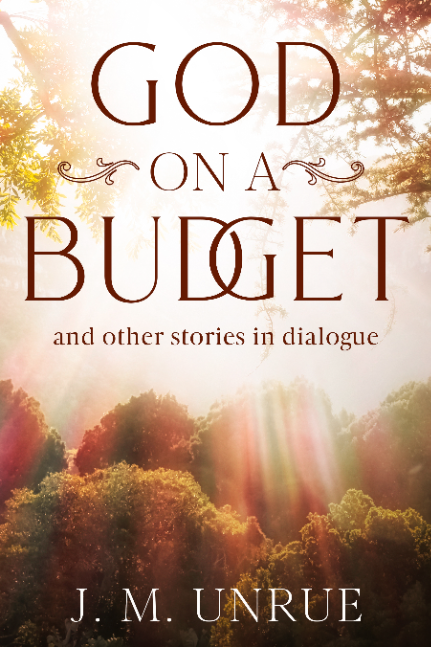
The result is my new book God on a Budget and other stories in dialogue. Who knows, maybe I’m onto something.
Still, I haven’t answered the question, and I suppose I should, if for no other reason than to articulate a purpose for such a purposeless exercise.
What am I trying to prove?
That in the effort to get it right, I have produced something unique. Granted, this is not qualitative assessment. This does not address a level of artistry or even soundness.
This simply means that I pulled it off and am (mainly) pleased with the outcome.
After all, we all have something to prove. Don’t we?
What an Ending!
When all the results are tallied, there are only three fundamental conclusions a writer can make to end a story—life is good, life’s a bitch, life is survivable.
People tend to like happy, feel-good endings, a portent of a promising future, everything all tied up nice and neat. The reason for this is simple. The real world is a messy place, rife with apprehension, a daily slog with gremlins hiding everywhere. We know we are being manipulated by the writer. We just don’t care. We need the elevation of spirit the same way people need church. A surrogate buoyancy to get us through the next round of stressors.
The adverse of this deals with the prospect of ultimate failure. This is honest in that such is the case for all of us at any given time, forays into discouragement that lay us low, strain our coping skills, and last as long as they last. The dishonesty stems from the pretense that a desperate end somehow equates to artfulness. A hero is only valuable as a dead one. Someone has to suffer interminably or the real world is left hungry for verity. We rejoin our lives with a skewed sense of gratitude. We leave an immaterial world with the belief that life is indeed unkind but at least we’re not on the receiving end—this time.
The last intends to illustrate that all life is a matter of perspective. Happiness is transient. Death can be a blessing. Nothing can truly thwart us as long as we have a happy face emoji at the ready. Optimism is not only a choice, but a way of life. Of course, so is pessimism. We spend our lives at the fulcrum, proactive or not, reactionary or inert. Careers sour, but there are new opportunities. Relationships fail, but new hope exists. Life is never one thing. Life is what you make it, unless you are a privileged legatee.
As a writer, I tend toward the first, though with qualifications.
First, the real world is for journalists, not fiction-writers. You want to pee in the pool, write an op-ed. Don’t bring doom and gloom to the table just because you think you’re a poet.
Secondly, regardless of attendant tribulations, there is always an exit. At least until you stop drawing breath. This is not optimism. This is reality. The ebb and flow of life does not allow for ultimate defeat—only evolution. One step forward, two steps back, still provokes a change-of-direction. Our existence on this earthbound plane is not static, nor will it ever be.
Lastly, hope is not a delusion. Hope exists because there is a frame of reference for enrichment. If there has ever been love, love is real. If there has ever been success, there is potential. If peace-of-mind has inhabited the psyche but for a fleeting moment, we may yet recognize sanity.
The fiction writer brings all of these elements to bear within the same story. What we have learned is that the true ending is never the last word on the page.
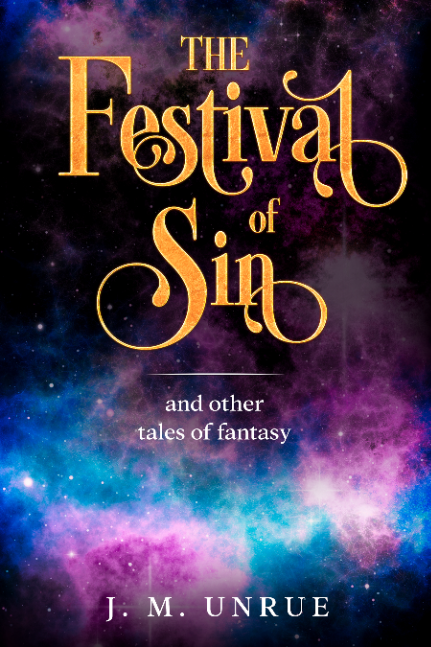
Beginning January 2, 2024, The Festival of Sin and other tales of fantasy will be on a temporary eBook promo for $.99.

Writing With Humor
Humor involves surprise and misdirection, and requires that the reader, or the listener, not take things too seriously. Consider the third verse in Bob Dylan’s song, “Memphis Blues” for example:
Mona tried to tell me
Stay away from the train line
She said that all the railroad men
Just drink up your blood like wine
An' I said, ‘Oh, I didn't know that,’
But then again, there's only one I've met
An' he just smoked my eyelids
An' punched my cigarette
At this point in the song, Dylan doesn’t wait for you to get the joke; he charges into the chorus, “Oh, Mama…” while his droll juxtaposition of “eyelids” and “cigarette” is just beginning to take shape in your mind. This sudden change of direction makes the refrain even wittier.
Many of us think of intelligence as the comprehension of truth and beauty, and that mirth lies in some separate region. I don’t. Humor expands the intellect, making it more complete and satisfying. Intelligence without humor is like a fine meal without wine, dessert or espresso.
In his poem, Ode on a Grecian Urn, John Keats penned the famous line:
“Beauty is truth, truth beauty, – that is all ye know on earth, and all ye need to know.”
To which I reply, “Without humour, ye be living in a wasteland.”
When writing fiction in the first person, internal dialogue reveals the inner workings of the protagonist’s mind and is a great place to inject comedy into the narrative.
Jesse Thorpe is the narrator/private detective of my mystery novel, Dead Down East. Jesse has a cheeky sense of humor, which he allows to leak out now and again, not just because he likes to have fun, but also to maintain calm when things get perilous. The first really dicey moment for him occurs in the middle of chapter four, as he is trying to worm his way through an FBI roadblock. In the first draft, I had chosen that moment to insert a rather lengthy internal monologue, to expose the witty side of Jesse’s nature. I was having so much fun with it that by the time I was done, it was almost fifteen hundred words long. And while I liked the tension it created by suspending the dramatic moment in mid-air—for several pages—eventually I decided that it would be more effective as a prologue for the book. This way, on the very first page, the reader gets a preview of the inner workings of Jesse’s mind, a snapshot of his modus operandi and a quick peak at his girlfriend.
What follows are the first two paragraphs of that prologue. I hope it serves to demonstrate the use of humor in writing, and, most of all, I hope it tickles your funny bone.
Apologies and compliments are two remarkably effective devices for disarming adversaries in life and hecklers in bars. If you consider the socially adept people you know, you’ll see that they use these two conversational tools frequently and with ease. I remember the first time it fully dawned on me how valuable they could be.
Angele and I had been dating for a couple of weeks. Our next planned event was scheduled for Saturday night. So I was a bit surprised when she arrived unexpectedly at my place on Tuesday evening. I guess she decided that there was something that couldn’t wait until the weekend. The moment she walked through the front door, I began to suspect what that “something” was. She had a gleam in her eyes that seared me from the inside of my nimble imagination right down to my insteps. I surmised that she was either ovulating, or she had a sudden urge for a tour of the Thorpe habitat. I began to mentally review the floor plan of the house. “Now, where is my bedroom?” I thought. “I know it was here this morning.”