

#CreativeWriting
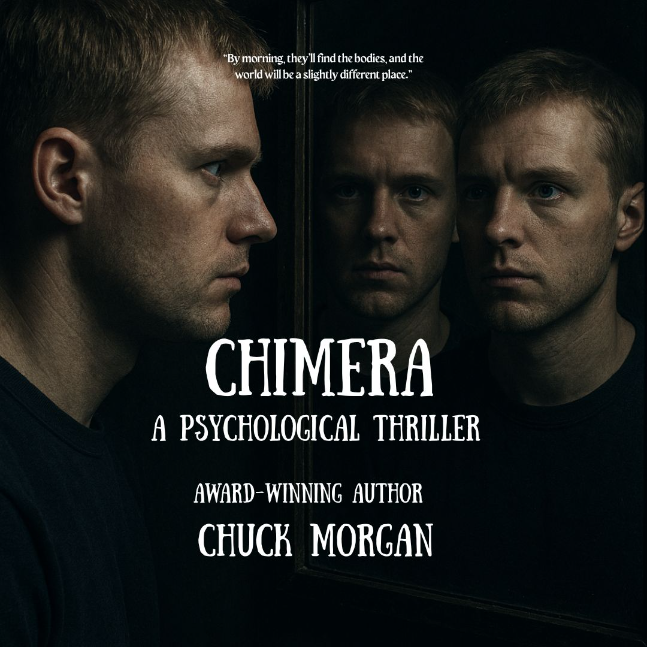
NEW PSYCHOLOGICAL THRILLER BY AWARD-WINNING AUTHOR CHUCK MORGAN
CHIMERA DELIVERS A CHILLING PSYCHOLOGICAL THRILLER WHERE IDENTITY
FORENSICS AND MURDER SPIRAL INTO ONE. NEW RELEASE EBOOK PRICE ONLY…$0.99 FOR A LIMITED TIME.
A tense and cerebral novel by award-winning Chuck Morgan blurs the line between hunter and hunted inside a meticulously staged nightmare.
New York, NY, February 26, 2026 — Author Chuck Morgan unleashes a gripping psychological thriller with Chimera, a Kindle edition that fuses forensic precision with unsettling suspense. The novel draws readers into a cold case resurgence where ritualistic murder scenes reveal chilling order rather than chaos and where the most dangerous question is not who the killer is but what the killer is becoming.
Chimera follows FBI Special Agent Dirk Trainor as a decades-old spiral of violence resurfaces with terrifying clarity. Each crime scene is staged with meticulous design, marked by a spiral cross signature that grows more refined with every kill.
As the investigation deepens, the evidence points inward. Adoption records surface. Fugue like
visions haunt Trainor. A DNA result fractures everything he believes about himself and his past. Alongside his partner Jill Quarters, Trainor races to stop the next murder while confronting the possibility that identity itself may be the missing link binding the crimes together.
Morgan crafts a narrative that balances procedural accuracy with psychological depth. The novel explores how self-control separates precision from chaos and how obsession can masquerade as order. Through layered revelations, Chimera examines the fragility of identity and the terrifying implications of inherited violence and hidden bloodlines.
What sets Chimera apart is its fusion of forensic detail and philosophical unease. The spiral is not merely a signature but a symbol of control ritual, and descent. Each chapter tightens the pattern, pulling readers deeper into a labyrinth where geometry becomes language and murder becomes message. Morgan’s prose is sharp, controlled, and relentless, mirroring the killer’s own meticulous discipline.
The inspiration behind Chimera stems from the idea that the most unsettling crimes are not driven by
impulse but by design. Morgan challenges readers to consider whether monsters are born, constructed, or uncovered through truth.
The book is now available. Secure your copy here: https://www.amazon.com/dp/B0GG5TXDSH
For interview requests, or additional information, please contact:
Chuck Morgan
Email: cmorganwriter@hotmail.com
Why Do Some Fiction Book Covers Feel Timeless While Others Fade Quickly?
Why Do Some Fiction Book Covers Feel Timeless While Others Fade Quickly?
Chuck Morgan, Crime Fiction Author
There's a blend of design choices and cultural context that determine longevity, and you can learn to spot them: enduring covers use clear, restrained typography, balanced composition, and symbols that tap universal themes rather than fleeting trends; your eye also responds to durable production and flexible branding that translate across formats and decades, so timelessness is both aesthetic and strategic.
Design fundamentals that age well
You rely on a handful of durable choices to keep a cover from dating itself: a restrained 2-3 color palette, a strong typographic hierarchy, and a clear grid based on common trade sizes (5"×8" or 6"×9"). Historical examples-Penguin's orange fiction block since 1935 and Faber & Faber's typographic simplicity-show how consistent systems outlast trends. Favor scalable elements, avoid trendy textures, and design so the cover reads at thumbnail and full scale.
Composition, proportion, and the power of restraint
You create longevity by placing focal elements on established anchors: the rule of thirds or golden ratio (~1.618) guides eye flow and makes covers feel balanced. Use a 4-6 column grid, keep outside margins roughly 0.5-0.75", and let negative space breathe around type and imagery. Designers who pare back competing elements; single focal image and one dominant type block, generate covers that stay readable and relevant across formats and decades.
Timeless typography and enduring color systems
You pick typefaces with pedigrees-Garamond, Bembo, Baskerville for serifs; Helvetica, Univers, Frutiger for sans-then limit families to one display and one text style. Adopt a 2-3 color system and prefer Pantone spot inks when you need consistent print matches; CMYK works for mass trade but can mute saturated hues. Those choices give your cover reproducible, legible identity from jacket to ebook thumbnail.
You fine-tune further by pairing typefaces for contrast (large display at 48-72 pt on jacket fronts with secondary at 18-24 pt), applying optical kerning, and considering x-height for legibility at small sizes. Stick to two weights per family, use spot color for a single pop when possible, and study case studies like Chip Kidd’s 1990s covers-bold display type plus minimal imagery-to see how restraint and precise type work together to create lasting recognition.
Imagery and symbolism
Evocative, archetypal imagery versus trendy literalism
You react faster to archetypal images-eyes, keys, maps, a single weathered object because they condense theme into a memorable emblem. F. Scott Fitzgerald’s 1925 cover art (Francis Cugat’s “celestial eyes”) is a textbook example of an enduring motif. Many 2000s-2010s covers that leaned on literal photography or topical props, especially in YA, often date within five years as fashion and photo styles change, leaving you with a cover that feels of-the-moment rather than timeless.
Cultural specificity, universality, and iconography
You judge iconography by how a symbol travels: crowns and clocks usually read globally, while region-specific motifs-Andean textiles, Japanese ukiyo-e references, West African adinkra, anchor a cover to a place and audience. Editions of One Hundred Years of Solitude, for example, show wildly different visual vocabularies across Latin America, Europe and the U.S., which helps local resonance but can fragment a book’s global visual identity.
You should weigh color and symbol meanings when aiming for longevity: white signals purity in many Western markets but mourning in parts of East Asia, red can mean danger, luck or romance depending on culture, and pictorial metaphors translate unevenly. Test iconography across target markets; prefer scaled-back symbols that adapt to typography; and use a distinctive motif-one visual element that can be resized or recolored-to maintain recognition across editions and decades.
Production and material longevity
Manufacturing choices determine whether your copy will look decades old or freshly discarded; acid-free, lignin-free papers and Smyth-sewn bindings are proven to last 100-500 years in archival conditions, while cheap perfect binding and low-weight filler paper (50-70 gsm) start failing in 10-20 years. You’ll notice publishers like Folio Society and Penguin Deluxe invest in 120-160 gsm endpapers, 300-350 gsm cover boards and PUR adhesive to keep spines intact through heavy use.
Paper, printing techniques and finishes that endure
Archival 100% cotton or alkaline-buffered papers resist yellowing and can outlive wood-pulp stocks by centuries; interior text typically reads best at 70-90 gsm, but you’ll find durability jumps with 90-120 gsm grades. Offset lithography delivers consistent ink laydown for long runs, while digital suits short runs with variable data; finishes such as aqueous coatings, matt-laminate and hot-foil stamping protect covers-aqueous resists abrasion, matt preserves tones, and foil adds durability to lettering.
Reissues, dust jackets, and how physical care preserves relevance
Reissues often pair refreshed jacket art with upgraded materials-clothbound editions, slipcases and sewn signatures-to keep the book physically and visually relevant. Store jackets in archival polyester (Mylar) sleeves, keep humidity at 40-50% RH and temperature around 18-22°C, and place books upright with gentle bookends to avoid spine creep. Libraries and collectors use slipcases and periodic condition checks to extend both life and resale value.
When publishers mark anniversaries, they frequently upgrade production: 50th- or 100th-anniversary editions commonly include heavier cover boards, sewn binding, and archival paper, which you’ll see in limited runs from houses like Vintage and the Folio Society. For your own copies, use pH-neutral boxes or silica-gel packs to stabilize microclimates, avoid direct sunlight that fades inks in weeks to months, and handle spines with a cradle or your hands at the boards rather than forcing open the joint-small habits add decades to a book’s usable life.
Market dynamics and trend cycles
Short promotional windows, retailer merchandizing rules and cultural fashions conspire to make covers move fast: publishers concentrate marketing spend into 6-12 week launch cycles, retailers rotate front-of-store displays monthly, and social platforms like BookTok have vaulted titles such as The Song of Achilles back onto bestseller lists within days. You feel these forces as visible churn-one season’s neon gradients and serif-minimalism give way to the next aesthetic as attention and shelf space get redistributed.
How marketing, retail and fashion drive rapid turnover
Marketing teams chase visibility, so you’ll see covers redesigned to match current ad assets, influencer aesthetics and retail planograms; that alignment boosts conversion but shortens a look’s lifespan. Trade retailers favor bold, category-signaling designs on endcaps, while indie stores rotate themed tables by month, and fast-fashion cycles borrowed from apparel cause genre palettes-pastel romcoms, dark thriller matte blacks-to surge and fade within a single selling season.
Publisher strategy, series branding and backlist stewardship
When you manage a series or backlist, consistent spine treatments and logo treatments create discoverability that outlasts trends-Penguin Classics and many long-running fantasy series use uniform spines so readers can spot collections at a glance. You’ll also see publishers time reissues and new jackets to media tie-ins, anniversaries or awards, turning one-off marketing spikes into sustained sales for older titles.
You can extend a title’s lifespan by employing tiered editions, staggered reprints and coordinated campaigns: issue a trade paperback, follow with a mass-market or illustrated edition, and schedule a boxed set or anniversary slipcase around a film/TV release. Targeted pricing, placement in backlist-focused catalogs, and partnerships with book clubs or subscription boxes often multiply visibility-HarperCollins and Penguin regularly use these levers to convert single spikes into multi-year backlist revenue.
Reader perception and cultural context
You often read covers through cultural filters: Penguin’s orange fiction launched in 1935 still signals “classic” to many, while film tie-ins like The Hunger Games (2012) or Gone Girl (2014) shifted expectations toward cinematic imagery. Designers, marketing and major adaptations nudge your sense of what feels durable; when a book is repeatedly reissued, its visual language gets reinforced across bookstores, libraries and online thumbnails, which you interpret as either timeless coherence or a dated trend depending on the era and exposure.
Nostalgia, memory, and the role of collective taste
You respond strongly to nostalgia because it ties cover cues to personal and collective memories: mid-century paperbacks with Futura or Bodoni type, chipboard spines and limited palettes evoke 1950s-60s reading habits. Collectors pay hundreds or thousands for certain 1950s first editions, and designers like Chip Kidd (Jurassic Park, 1990) have created images that tap retro sensibilities. That shared memory network helps your preferences merge into a taste for “retro” or “timeless” aesthetics.
Critical reputation, awards and canonization effects
You perceive covers differently once critics and awards endorse a work: Booker, Pulitzer, Nobel or National Book Award winners often see backlist sales rise by hundreds of percent and are reissued with sober, enduring designs. Arundhati Roy’s 1997 Booker win and Kazuo Ishiguro’s 2017 Nobel illustrate how prizes amplify visibility and push publishers to present books as lasting cultural artifacts, which changes how you and the market treat their covers.
You can see publishers’ playbook after a prize: they add laurels, commission restrained typography and fold a book into a series-Penguin Modern Classics or Norton Critical Editions-so instructors, libraries and collectors accept a stable look. Course adoptions alone can move thousands of copies and lock a cover into academic circulation. Practical outcomes include uniform spines for shelf presence, larger type for longevity, and marketing that converts a temporary hit into a canonical-looking object you’re likelier to trust and keep.
Practical lessons for designers and publishers
Treat your covers as product systems: build a repeatable typography and color language (Penguin’s tri-band system from 1935 shows how a simple device endures), A/B test thumbnails because small image variants can shift click-through by double-digit percentages, and align cover choices with marketing windows and print specs so spine and trim communicate on-shelf and online.
Case examples: covers that stayed relevant versus those that dated quickly
You can study Francis Cugat’s 1925 artwork for The Great Gatsby and Harper Lee’s recurrent tree motif-both motifs persisted across reissues for decades-against 1980s airbrushed airport-thriller paperbacks and some 2010s white-minimalist trends that often looked tired within 5-7 years, showing how iconic imagery and clear systems outlast trendy stock-photo aesthetics.
Guidelines for creating an enduring fiction cover
Prioritize legibility at thumbnail size (ensure title reads at ~100 px wide), limit palettes to two or three dominant colors, establish a strong typographic hierarchy, design modular elements for variants and translations, and avoid overtly trendy textures or fonts so your cover reads coherently across formats and years.
Operationalize those guidelines by producing a small asset system: a thumbnail-focused layout, a full-cover layout, and a scalable vector title; define contrast targets (WCAG 4.5:1 for body-level text), specify final print dimensions (e.g., 6×9" at 300 DPI → 1800×2700 px), and version three tested thumbnails before committing to wide print runs.
Conclusion
The lasting appeal of some fiction covers comes from simplicity, strong typography, and imagery that taps archetypal themes so your cultural associations endure, while trend-driven designs rely on dated motifs, faddish color palettes, or overworked details that quickly age; when you evaluate or commission a cover, prioritize clarity of concept, material quality, and a visual restraint that serves the story, because those choices help your book feel relevant across generations.
How can the “Reverse Writing” Method Dissolve Creative Paralysis?
How can the “Reverse Writing” Method Dissolve Creative Paralysis?
Chuck Morgan, Crime Fiction Author
Most people experience creative paralysis at some point, leading to frustration and stalled projects. The "Reverse Writing" method can be a transformative tool for you to break through this block. By encouraging you to start with the end goal in mind and work backward, this technique helps reframe your thinking and unlocks your creative potential. This post will explore how implementing this approach can invigorate your writing process and foster innovation, enabling you to regain confidence in your creative endeavors.
Understanding Creative Paralysis
Creative paralysis manifests as an inability to generate ideas or move forward with projects, often leading to frustration and self-doubt. It’s that moment when inspiration vanishes, leaving you staring at a blank page or canvas. This phenomenon can affect anyone, regardless of their artistic background or experience level, hindering progress and stifling expression.
Defining Creative Paralysis
Creative paralysis is the mental block that prevents you from producing creative work. You might find yourself overwhelmed by choices, fearing judgment, or struggling with perfectionism. This state of inaction can hinder not just individual projects but also your overall creative confidence.
Common Triggers and Symptoms
You may encounter creative paralysis because of various triggers such as deadlines, high expectations, or burnout. Symptoms include procrastination, excessive self-criticism, and a sense of being stuck, which can hinder your creative flow and leave you feeling unfulfilled.
Common triggers include external pressure, like looming deadlines, leading to anxiety about meeting expectations. Personal feelings of inadequacy, possibly stemming from past failures, can exacerbate this state. Symptoms often manifest in procrastination and avoidance behaviors. For instance, over-analyzing initial ideas can transform into pursuing trivial tasks instead, which further delays actual creative work. Understanding these triggers and symptoms can be pivotal in addressing creative paralysis effectively.
Mechanisms Behind Reverse Writing
Reverse writing operates on a psychological level, leveraging techniques that facilitate a freer flow of creativity. By altering the typical writing process, it encourages you to bypass internal editors and self-doubt, fostering a natural connection to your thoughts. This method does not just apply to writing; it serves to unlock your mindset, allowing you to explore ideas without judgment, promoting an exploratory approach to content creation.
Psychological Insights
Engaging in reverse writing helps you tap into your subconscious, reducing anxiety associated with traditional writing. The format can ease pressure by allowing you to focus on expression instead of structure. You may find that ideas develop naturally when you write backwards, providing insight into your true thoughts and emotions without the interference of critical thought.
Cognitive Benefits
From a cognitive perspective, reverse writing can enhance your brain's flexibility, allowing for more innovative connections between concepts. Studies show that altering tasks, like writing in reverse, can stimulate different neural pathways and lead to improved problem-solving skills. As your mind explores ideas in a non-linear fashion, you break free from rigid thought patterns, inviting a more fluid creative process that can be applied across various disciplines.
Engaging in reverse writing can increase your cognitive load capacity, meaning your brain becomes better at multitasking and managing various streams of thought simultaneously. This training effect encourages deeper thinking and enhances your ability to switch between ideas effectively. As a result, you not only generate more ideas but cultivate an agile mindset that thrives on complexity and innovation, reinforcing your creative abilities.
Practical Application of Reverse Writing
The reverse writing method can be seamlessly integrated into your creative routine, offering a fresh perspective that encourages fluid thought. This technique involves starting with your conclusion or main idea and working backward to explore concepts and details. By doing so, you can break free from rigid thinking patterns and unlock a more dynamic writing process.
Step-by-Step Guide
| 1. Identify Your Main Idea | Write the conclusion or key concept you want to express. |
| 2. List Supporting Points | Create an outline of the arguments or details that lead to your conclusion. |
| 3. Expand Each Point | Elaborate on each supporting point, providing examples or anecdotes. |
| 4. Compose Your Paragraph | Integrate your ideas into a cohesive text, starting from the conclusion. |
Tips for Effective Practice
To maximize the benefits of reverse writing, consider incorporating these strategies into your practice. Establish a dedicated time for writing, ensuring minimal distractions. Use prompts or structured themes to guide your reverse writing process. Embrace free-writing to foster spontaneity, allowing ideas to flow without self-censorship. Experiment with different formats to discover what resonates with you.
- Set a timer for short writing bursts to maintain focus.
- Switch up your writing location to stimulate creativity.
- Involve peers for feedback to refine your ideas.
- Perceiving each exercise as an opportunity for growth enhances your creativity.
Revisiting your steps can provide insight into your creative habits. Variation is key; try writing in different genres or styles to keep the process engaging. Allow yourself to make mistakes; they often lead to unexpected breakthroughs. Pay attention to how the reverse flow of ideas shapes your understanding, and adapt your approach based on what you learn about your writing preferences. Perceiving this journey as a learning experience can enrich your overall creativity.
- Regularly reflect on your progress to identify patterns.
- Assess the emotional responses generated by your writing.
- Keep a journal to document your reverse writing experiences.
- Perceiving these reflections as valuable insights will inspire further exploration.
Real-Life Success Stories
Many creatives have experienced transformational breakthroughs through the “Reverse Writing” method, showcasing its effectiveness in overcoming creative blocks. By exploring these real-life examples, you gain insight into how others have harnessed this technique to unlock their potential and boost their productivity.
Case Studies
Consider these interesting case studies that highlight the tangible benefits of the reverse writing method:
- Jane, a novelist, completed her first draft in three weeks using reverse exercises, doubling her previous writing speed.
- Michael, a graphic designer, reported a 60% increase in client satisfaction after implementing the method to generate fresh concepts.
- Rachel, a filmmaker, found that script revisions took only half the time once she started reverse writing, leading to three completed projects in less than a year.
- Tom, a marketing copywriter, boosted his weekly output by 40% after integrating reverse writing exercises into his routine.
Testimonials from Creatives
Creatives across various fields rave about the life-changing impact of the Reverse Writing method. Testimonials reveal experiences of newfound clarity and productivity, with many attesting to how this approach amplified their creative flow. Each story is a testament to the method's versatility, highlighting that whether you are an author or a designer, this technique can significantly enhance your output and inspire innovation.
Overcoming Challenges with Reverse Writing
Engaging in reverse writing is not without its hurdles. Many may struggle to let go of traditional writing norms, fearing judgment or imperfections. Others grapple with the initial discomfort of starting in a reverse manner, which feels foreign to their established routines. Such obstacles can generate frustration, and you may feel tempted to abandon this promising technique altogether.
Common Obstacles
In the journey of implementing reverse writing, you might encounter several challenges. Resistance to change can arise, particularly if you're accustomed to a linear approach. The pressure to produce 'perfect' content can stifle your creativity, making it difficult to embrace the exploratory nature of this method.
Strategies for Persistence
To maintain your commitment to reverse writing, establish a consistent routine that encourages experimentation. Set aside dedicated time each day to practice without pressure, allowing your creativity to flow freely. Engaging in supportive communities or workshops can also provide motivation and accountability, reinforcing your efforts.
Building a habit around reverse writing can be transformative. Consider starting with short prompts or challenges that inspire you to write freely without self-judgment. For instance, allocate just 10 minutes a day for free writing in reverse order. You can share your writing in workshops or online forums for feedback, which fosters growth and reduces isolation. Over time, by weaving reverse writing into your daily practice, you cultivate resilience against creative blocks, turning potential frustrations into opportunities for innovation.
To wrap up
Drawing together the insights on the “Reverse Writing” method, you can effectively dissolve creative paralysis by shifting your perspective and allowing your ideas to flow freely. This technique encourages you to start at the conclusion, energizing your thought process and helping you bypass the usual constraints that stifle creativity. By embracing this approach, you can unlock new pathways for inspiration, leading to innovative solutions and renewed confidence in your creative capabilities.
Can Outsourcing the Tough Stuff Elevate an Author’s Craft?
Can Outsourcing the Tough Stuff Elevate an Author’s Craft?
Chuck Morgan, Crime Fiction Author
With the ever-growing landscape of publishing, exploring how outsourcing specialty tasks can bolster your literary works is vital. By delegating aspects like editing, formatting, and marketing, you can dedicate more time to your creative process, enhancing the quality of your writing. This post examines the potential benefits and considerations of outsourcing, helping you determine if it's the right strategy for elevating your literary oeuvre.
The Role of Specialized Tasks in Literary Creation
Defining Specialized Tasks in Writing
Specialized tasks in writing encompass the intricate layers of storytelling, character development, and thematic exploration that elevate a piece from mere narrative to an art form. You engage with elements such as tone, subtext, and pacing, which require a careful understanding of your audience and intent. These tasks often demand a level of detail that transforms simplistic prose into rich, immersive experiences, inviting readers to explore deeper into the text.
The Impact of Detail on Literary Quality
Detail significantly influences literary quality, as it weaves a more intricate tapestry of meaning and emotion. Engaging with sensory descriptions and emotional subtleties enriches your narrative, allowing readers to connect more profoundly with characters and settings. This level of detail not only enhances reader immersion but also propels themes and motifs, resulting in a more resonant and memorable experience.
Consider how meticulous attention to detail can shift a story's effectiveness. Classic works, like those of Gabriel García Márquez, thrive on layered descriptions that evoke strong emotions and vivid imagery. By intensifying the reader's sensory experience, whether through the smell of incense in a pivotal scene or the nuanced reaction of a character in a crisis, you create moments that linger well beyond the page. This depth does not merely embellish writing; it transforms it, granting readers insight into experiences that mirror real life, making your narrative not only a story but a journey of connection and reflection.
The Outsourcing Landscape: Who and What to Consider
Understanding the outsourcing landscape involves not just identifying tasks but also finding the right partners who can bring your vision to life. You should consider industry experience, client reviews, and expertise in the specific tasks you want to outsource. This ensures that the professionals you choose can both match your style and elevate your literary work.
Identifying Qualified Outsourcing Partners
Choosing qualified outsourcing partners requires thorough research and careful vetting. Look for individuals or agencies that specialize in literary tasks, from editing to cover design. Review their portfolios, assess their communication skills, and check for testimonials from other authors. Partnerships built on trust and professional competence will enhance the quality of your projects.
Evaluating the Tasks Suitable for Outsourcing
Identifying which tasks to outsource hinges on discerning which elements can enhance your productivity and creativity. Consider areas that consume a lot of time but do not directly involve the core of your storytelling, such as proofreading, research, or social media management. By outsourcing these functions, you can focus on writing and refining your craft, thus enhancing your literary oeuvre.
| Task Type | Reason for Outsourcing |
| Proofreading | Ensures grammatical accuracy |
| Research | Frees up time for writing |
| Marketing | Professional promotion skills |
| Cover Design | Visual appeal to attract readers |
| Transcription | Efficiency in turning drafts to text |
When evaluating tasks suitable for outsourcing, focus on those that challenge your productivity or detract from your storytelling. An example might be hiring a virtual assistant for administrative tasks, allowing you to dedicate more time to your writing craft. You can also consider editorial services for nuanced revisions or specialized beta readers for targeted feedback on specific themes or characters. Prioritization should align with your creative and logistical needs.
- Knowing what tasks you excel in helps define what to outsource.
| Consideration | Example |
| Time Consumption | Researching historical facts |
| Skill Specialization | Graphic design for cover art |
| Creative Liberty | Collaborating with a co-writer |
| Market Reach | Leveraging social media expertise |
| Element of Surprise | Feedback from unfamiliar audiences |
Evaluating the tasks suitable for outsourcing can significantly impact your writing process. Focusing on aspects that do not require your specific touch allows you to allocate energy towards creating interesting narratives. Engaging with professionals to handle your social media presence or manage your schedule can provide you with more room to innovate and expand your storytelling capabilities, ultimately enhancing your literary production.
- Knowing the balance between your strengths and what to delegate leads to effective outsourcing.
Balancing Authenticity and Efficiency
Balancing authenticity and efficiency requires a clear strategy. You must ensure that the outsourced tasks resonate with the core of your writing while allowing you to focus on higher-level creativity. This dual focus not only preserves your unique voice but also enhances productivity, enabling you to engage more deeply with your audience.
Preserving Authorial Voice in Collaborative Settings
Maintaining their authorial voice amid collaboration involves establishing clear guidelines and expectations for everyone involved in the writing process. By providing reference materials and tone descriptors, you help ensure that the essence of your work remains intact while benefiting from external perspectives. This approach fosters a cohesive narrative that feels true to your style.
Strategies for Seamless Integration of Outsourced Work
Effective integration of outsourced work starts with meticulous communication. Clearly outline the specifics of your voice and style, using examples from your existing writings. Employ collaborative tools that allow for real-time feedback and revisions, ensuring the final product aligns with your vision. Regularly review and refine the outsourced content to maintain the desired authenticity.
Using project management tools and clear workflow processes can significantly enhance the effectiveness of outsourced work. Implementing shared documents and maintaining open lines of communication throughout the writing process fosters collaboration. Consider setting up milestones for drafts to encourage feedback loops and adjustments. For instance, using platforms like Trello or Asana allows you to track progress and align efforts with your creative goals. Engaging regularly with your collaborators ensures adjustments can be made promptly, maintaining the continuity of your voice and intent. Ultimately, fostering a collaborative environment enriches the outcome while keeping your authentic voice at the forefront.
Success Stories: Authors Who Transformed Their Work
Many authors have embraced outsourcing to elevate their literary creations, enhancing both quality and productivity. By collaborating with experts, they have reshaped their narratives, maintained authenticity, and reached a wider audience. These success stories illustrate how strategic partnerships can redefine your writing journey while maintaining your unique voice.
Notable Examples of Outsourcing in Modern Literature
Several well-known authors have successfully outsourced aspects of their writing. For instance, Neil Gaiman used a collaborative approach with illustrators and editors to enrich his storytelling. Similarly, James Patterson employs co-authors to produce numerous bestsellers, allowing him to maintain creative output across multiple projects while ensuring quality through expert collaboration.
Important Points from Successful Authors' Experiences
Successful authors reveal that outsourcing can enhance creativity and efficiency in the writing process. Engaging specialists in editing, research, or even content creation allows you to focus on your strengths. These authors highlight the importance of selecting the right collaborators and maintaining open communication to ensure alignment with their vision.
Insights from these successful authors show that establishing clear objectives and expectations is vital when outsourcing tasks. Leveraging the expertise of editors or research assistants not only streamlines your workflow but also provides fresh perspectives that can inject new life into your narratives. Balancing your creative vision with the talents of others can lead to enhanced literary depth and broader appeal, as demonstrated by the impressive outcomes of those who have effectively integrated outsourcing into their writing processes.
Potential Pitfalls: When Outsourcing Goes Wrong
Outsourcing can lead to several pitfalls that may derail your creative process. Poor communication with freelance writers or editors can cause misunderstandings, resulting in outputs that don't align with your vision. Relying heavily on others for your unique voice and style can dilute the essence of your work, leading to an inauthentic final product. Deadlines may also become an issue, as external contributors might miss timelines, disrupting your publishing plans.
Common Missteps and Their Consequences
Failing to vet the skills and experience of the individuals you outsource can lead to subpar work that ultimately reflects poorly on you. For instance, choosing a freelancer without a background in literary writing may yield content lacking depth and sophistication. Neglecting to establish clear guidelines and expectations often results in a mismatch between your vision and the final deliverable, risking your reputation and reader satisfaction.
Mitigating Risks Through Strategic Planning
Employing a strategic planning approach can significantly reduce the risks associated with outsourcing. Establish clear objectives, timelines, and specific guidelines for the nuances you want preserved in your work. Regular check-ins and feedback loops can ensure that the outsourced tasks align closely with your creative vision. By choosing the right partners based on their expertise and past performances, you create a supportive framework that enhances rather than detracts from your literary oeuvre.
This entails developing a comprehensive brief outlining your expectations and desired outcomes. Engaging in trial projects with potential collaborators can help gauge their ability to meet your standards. You could consider implementing periodic reviews to assess progress and facilitate adjustments as needed. This method not only sharpens focus but also reinforces your narrative's integrity while maintaining creative control throughout the outsourcing process.
Summing up
Conclusively, outsourcing nuanced tasks can significantly enhance your literary oeuvre by allowing you to focus on your core strengths—storytelling and creativity. By delegating time-consuming or specialized tasks to skilled professionals, you can enhance the quality of your work and expand your creative horizons. This strategy not only optimizes your productivity but also enriches your writing with diverse perspectives and expertise, ultimately leading to a more polished and interesting body of work.
Is collaboration worthwhile for indie storytellers?
Is collaboration worthwhile for indie storytellers?
You may find that collaboration can transform your storytelling process in unexpected ways. As an indie storyteller, working with others can enhance creativity, expand your audience, and refine your craft. Exploring various perspectives and skills fosters a dynamic environment that encourages innovation. This post looks into the benefits and challenges of collaborative projects, helping you decide if this alchemical process is right for your narrative journey.
The Unique Currency of Collaboration
Collaboration transforms storytelling by leveraging diverse strengths and perspectives, creating a richer narrative experience. Indie storytellers benefit immensely from collective creativity, where unique voices meld into a cohesive dialogue that attracts broader audiences. Each collaborator brings their unique currency—expertise, insights, and fresh ideas—that enhances the overall project and elevates the final product. This fusion not only enriches the storytelling but also fosters a sense of community among creators.
Creative Synergy: Fueling Innovative Ideas
In collaborative environments, creative synergy emerges as individuals bounce ideas off one another, leading to innovative breakthroughs. Your project can grow as collaborators challenge convention and spark imaginative solutions. This collective brainstorming fosters an atmosphere where risks are embraced, and experimental narratives unfold, ultimately broadening the scope of your storytelling capabilities.
Resource Pooling: Maximizing Limited Budgets
Pooling resources enables indie storytellers to stretch limited budgets while enhancing production quality. By sharing talents, equipment, and contacts, you can access a broader range of skills and tools, making the project more viable. This collaborative approach transforms financial constraints into opportunities, as each member contributes their strengths and assets toward a common goal.
Using collaboration, you can access various tools and skills that might otherwise be out of reach. For instance, if you have a writer, a filmmaker, and a musician pooling their resources, the film could leverage high-quality audio and visuals without straining the budget. In a successful collaboration, these contributions can seamlessly blend, providing a more polished and professional outcome at a fraction of traditional costs. This approach also fosters a collaborative spirit, encouraging all participants to invest more personally in the project, ultimately leading to higher-quality results.
The Emotional Landscape: Navigating Relationships in Indie Storytelling
Emotional intelligence plays a pivotal role in indie storytelling, as navigating relationships with collaborators significantly influences both the creative process and the final product. A deeper understanding of emotions can enhance communication, foster a sense of community, and enable you to harness the full potential of your collaborators' input. Recognizing the emotional landscape not only enriches your stories but also creates an environment ripe for innovation and genuine connection.
Building Trust: The Foundation of Collaborative Success
Establishing trust is vital for collaborative success in storytelling. Being transparent, consistent, and respectful in your interactions lays the groundwork for open dialogue and shared ownership of the creative process. When everyone feels valued and heard, it cultivates a safer space for sharing ideas and taking risks, ultimately leading to more profound creative breakthroughs.
Conflict Resolution: Converting Tensions into Growth
Conflict is an inevitable aspect of collaboration, but instead of viewing it as a setback, consider it an opportunity for growth. Engaging with different perspectives allows for richer discussions and can clarify team objectives. A structured approach to conflict resolution fosters understanding, encourages alternative viewpoints, and can lead to transformative solutions that strengthen your collaborative work.
Managing conflict effectively requires a few key strategies. Actively listen to your collaborators to ensure everyone feels their voice is acknowledged. Encourage constructive feedback rather than personal attacks and focus discussions on solutions rather than problems. Highlighting common goals can realign everyone toward a shared vision. For example, indie filmmakers like the Duplass Brothers exemplify this approach, often resolving differences by prioritizing their narrative goals above personal disagreements, fostering a creative environment that propels their projects forward. By embracing conflict as a productive force, you cultivate a resilient storytelling team prepared to face challenges head-on.
Turning Ideas into Impactful Narratives
Transforming ideas into interesting narratives involves blending various elements—theme, structure, and character development—into a cohesive whole. This alchemical process requires not only creativity but also a keen awareness of how different voices and perspectives can enhance the story. By experimenting with new formats and collaborative dynamics, you elevate your narrative, creating a richer experience for your audience.
Diverse Perspectives: Enhancing Narrative Depth
Involving individuals from varied backgrounds brings fresh insights and angles to your storytelling. Each collaborator adds unique experiences and viewpoints, enabling you to explore complex themes and characters more authentically. Engaging in discussions that draw from multiple cultural, social, or professional experiences can lead to more relatable and impactful narratives, as you offer your audience a broader spectrum of human experience.
Collaborative Writing Techniques: Exploring New Dimensions
Adopting collaborative writing techniques can open new avenues for creativity and innovation in your storytelling. Techniques such as pairing writers for dialogue creation or using round-robin storytelling can generate unexpected twists and dynamic character interactions. Embracing tools like online brainstorming sessions or shared digital platforms encourages real-time feedback, allowing you to refine your ideas and enhance narrative flow collectively.
Using platforms like Google Docs enables multiple authors to contribute simultaneously, facilitating organic growth of the story. Incorporating methods like 'storyboarding' or 'character interviews' can further deepen character development and plot nuances. You might find that specifying roles, such as 'idea generator' or 'critical analyzer' during sessions helps structure collaboration, leveraging the strengths of each participant. This structured approach often results in narratives that are not only innovative but resonate more profoundly with their audience.
Measurable Outcomes: Assessing the Value of Collaborative Projects
Evaluating the success of collaborative projects extends beyond traditional metrics. You should consider various measurable outcomes such as audience engagement, social media impact, and the long-term value of partnerships formed during production. These factors can provide a clearer picture of the overall effectiveness and reach of your storytelling efforts, illustrating how collaboration can amplify your voice in an increasingly competitive landscape.
Audience Engagement: Metrics Beyond Box Office Sales
Your audience engagement can be gauged through multiple channels, including social media interactions, website traffic, and community feedback. While box office sales provide one measure of success, analyzing comments, shares, and likes on social platforms reveals deeper connections with viewers. Tracking these metrics over time helps you understand genuine interest in your work and refine future collaborative efforts.
Festival Circuit Success: How Partnerships Increase Visibility
Collaborative efforts can significantly elevate your project’s presence on the festival circuit. By joining forces with established filmmakers, you enhance your credibility, which can lead to more screening opportunities and networking advantages. Festivals often favor curated stories from teams with an interesting backstory, making collaboration a strategic move to enhance your visibility and increase your chances of recognition.
Networking at festivals opens doors to collaborations that can propel your career forward. When two or more storytellers tag-team for a project, their combined strengths attract attention from industry insiders and audiences alike. Consider the success of films that emerged from partnerships at Sundance or Cannes; these collaborations often lead to multiple awards, distribution deals, and increased marketing budgets. By pooling resources, you also gain access to a wider audience through shared promotional activities, further amplifying your visibility within the industry.
The Future of Indie Storytelling: Embracing Collaborative Models
As indie storytellers navigate an ever-evolving landscape, embracing collaboration enables them to blend diverse perspectives and skill sets. This shift not only enhances the depth of your narratives but also fosters a supportive community. By pooling resources, connecting with fellow creatives, and using innovative tools, you can explore new avenues for storytelling that resonate with wider audiences.
Emerging Platforms: New Frontiers for Cooperative Creation
New platforms like Wattpad and Discord offer indie storytellers innovative spaces for collaboration, allowing them to co-create in real-time and share feedback instantly. These platforms cultivate a sense of community, enabling you to engage directly with readers and fellow creators, which can lead to unexpected partnerships and collaborative projects.
Learning from Other Industries: Cross-Pollination Opportunities
Your storytelling can benefit significantly from examining how other industries collaborate creatively, adopting techniques from fields such as gaming and film production. Observing how these sectors integrate technology and audience engagement strategies can inspire your own methods of collaboration and story development.
The video game industry often collaborates across disciplines—designers work closely with writers and marketers to create immersive experiences. Understanding this model allows you to implement similar practices in storytelling, integrating various skill sets to enhance project quality. Building partnerships with professionals from diverse sectors can lead to innovative storytelling techniques and fresh ideas, creating a rich tapestry that elevates your creative work beyond traditional methods. Recognizing these cross-pollination opportunities will not only broaden your narrative scope but also open pathways for audience engagement you may not have previously considered.
Conclusion
With these considerations, you can assess whether the alchemy of collaboration is worthwhile for your journey as an indie storyteller. By engaging with diverse creators, you open doors to unique perspectives and shared resources that can elevate your work. While collaboration may require compromise and communication, the potential to enhance your storytelling and reach wider audiences makes it an interesting path. Embrace the opportunities that collaborative efforts provide, as they can significantly enrich your creative process and outcomes.
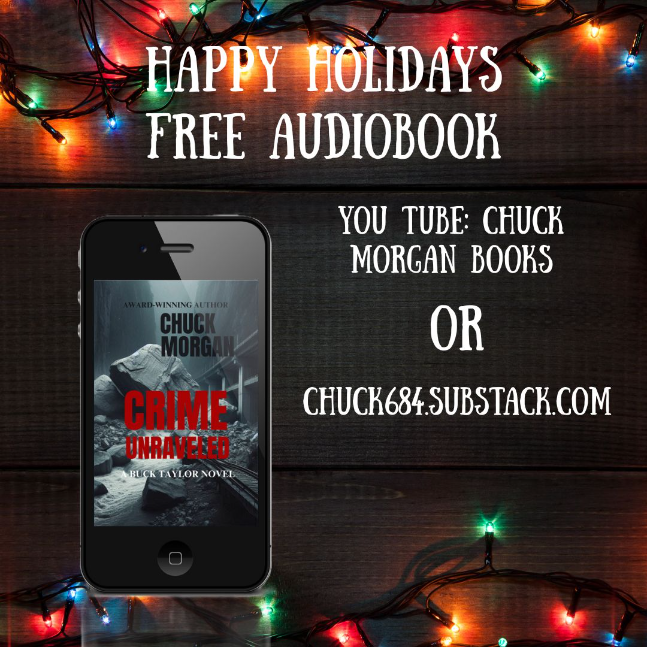
MERRY CHRISTMAS AND HAPPY HOLIDAYS
This week I wanted to do just a quick blog to wish everyone a Merry Christmas or Happy Holidays. As a way of thanking my loyal readers and those looking for a new crime fiction series to read I am offering one of my full length novels as a free audiobook on my You Tube page...Chuck Morgan Books or on my Substack pod cast at chuck684.substack.com. I hope you enjoy it. You can find the entire Crime Series as well as my other novels on Amazon or at chuckmorganbooks.com. Enjoy.
CRIME UNRAVELED — A Buck Taylor Novel (Book 13)
2025 Reader’s Favorite Book Awards — Crime Fiction Silver Medalist
A landslide buries a canyon—and uncovers a conspiracy.
A catastrophic landslide tears through Colorado’s iconic Glenwood Canyon, obliterating the highway and damming the Colorado River. As chaos spreads across the state, one chilling question arises from the rubble: Was this a freak act of nature or a meticulously engineered attack?
Colorado Bureau of Investigation Agent Buck Taylor steps into the devastation expecting answers. Instead, he finds murder. A geologist is executed. Another’s wife is brutally killed. And a powerful local family, steeped in wealth, influence, and buried secrets, stands at the center of a tightening web of lies.
When an ecoterrorist group suddenly claims responsibility, the investigation veers into dangerous new territory. With winter closing in and the body count rising, Buck and his team must race the clock to uncover the truth before the next disaster strikes. One that may hit far closer to home than anyone realizes.
Perfect for Fans of C.J. Box, Craig Johnson, Michael Connelly, and Nevada Barr
A gripping blend of crime, conspiracy, and Colorado wilderness suspense
Why Readers Can’t Put Down Crime Unraveled
• High-Stakes Natural Disaster Thriller: A massive landslide destroys Glenwood Canyon, setting off a chain reaction of danger, mystery, and political intrigue.
• A Murder Case with Teeth: What begins as a geological catastrophe spirals into homicide, revenge, and a deadly cover‑up.
• Buck Taylor at His Best: The award-winning CBI agent faces one of his most complex and personal investigations yet.
• Twists You Won’t See Coming: Ecoterrorists, family secrets, and shifting motives collide in a relentless, page‑turning pursuit of the truth.
• Authentic Colorado Atmosphere: Rugged landscapes, harsh winter conditions, and real-world investigative detail bring every scene to life.
• A Series That Keeps Delivering: Book 13 continues the acclaimed tradition of character depth, procedural accuracy, and emotional punch that fans love.
If you crave crime fiction packed with tension, heart, and explosive revelations… this is your next must‑read.
Add Crime Unraveled to your cart now and dive into Buck Taylor’s most dangerous case yet.
Which Quirky Habits Awaken a Dormant Muse Effortlessly?
Which Quirky Habits Awaken a Dormant Muse Effortlessly?
Chuck Morgan, Crime Fiction Author
Most creative individuals experience periods of stagnation, but incorporating certain quirky habits into their routines can effortlessly reignite their inspiration. From engaging in spontaneous dance breaks to maintaining a playful attitude towards failures, these unconventional practices can stimulate your mind and awaken your dormant muse. By embracing activities that divert your usual thought patterns, you allow creativity to flow more freely, ultimately leading to remarkable artistic breakthroughs.
Understanding the Muse
Grasping the essence of your muse involves recognizing its fluctuating nature. This elusive energy often appears when you least expect it, intertwining with your emotional state and daily experiences. By developing an awareness of your creative cycles, you can better understand when your muse is likely to spark inspiration or take a backseat.
The Role of Inspiration
Inspiration acts as the catalyst that ignites your creativity, manifesting through diverse stimuli such as art, the environment, or personal experiences. It can be a fleeting thought or a profound moment that triggers a surge of ideas, serving as the bridge between your inner world and expression.
Identifying Dormant States
Dormant states in your creative process often stem from routine or emotional fatigue. Recognizing signs of stagnation, like procrastination or a lack of enthusiasm, is crucial. These indicators suggest your muse may require a nudge, prompting you to explore unconventional practices that can revive your artistic spirit.
Identifying dormant states requires vigilance. You might notice a decline in creativity after prolonged periods of monotony or stress. When enthusiasm wanes, take time to assess your surroundings and mindset. Are you stuck in a repetitive routine? Are external pressures dulling your spark? Engaging with nature, trying new activities, or shifting your workspace can be effective ways to reinvigorate your muse and unlock dormant creativity.
Quirky Habits to Awaken Creativity
Physical Activities
Engaging in physical activity can drastically shift your mindset and spark creativity. Go for a brisk walk, try yoga, or dance to your favorite tunes. Even a few minutes of exercise releases endorphins, enhancing your mood and cognitive function. Research shows that even short bursts of activity can foster creative thinking by encouraging new connections within your brain.
Unconventional Rituals
Embracing unconventional rituals can lead to unexpected bursts of creativity. Whether it’s writing with your non-dominant hand or creating an art piece while blindfolded, these unusual methods can unlock new perspectives and insights. Rituals that feel silly or odd can liberate your mind from conventional constraints, allowing your muse to flourish.
Incorporating unconventional rituals into your routine nudges you out of your comfort zone, vital for sparking creativity. For instance, an artist might start each day by painting with a completely different medium or color palette. This unexpected shift not only rejuvenates your creative process but also reduces anxiety associated with stagnation. In doing so, you open up avenues for exploration, breaking away from the rigid patterns that often stifle innovation and originality.
Environmental Influences
Your surroundings play a pivotal role in igniting your creativity and influencing your mood. Whether it's the chaos of an urban landscape or the tranquility of a quiet room, the environment can either stifle or stimulate your thoughts. By curating a space that reflects your artistic aspirations, you effortlessly invite your muse to reawaken. Pay attention to how various elements—light, color, and sound—affect your emotional state and creative output.
The Power of Space
An intentionally designed space enhances your productivity and inspiration. Consider decluttering your workspace, adding personal artwork, or creating a dedicated zone for your creative endeavors. A minimalistic area allows you to focus, while vibrant decorations may uplift your spirit. Tailor your environment to suit your artistic needs and watch how it transforms your creative process.
Nature's Impact
Your connection to nature significantly boosts creativity and mental well-being. Studies show that spending time outdoors reduces stress and enhances cognitive function. Walking in a park or gazing at greenery can recharge your mind, allowing fresh ideas to flow freely. Nature fosters a sense of peace that can remove barriers to inspiration.
Many studies have highlighted the profound effect of nature on creativity. For instance, a 2012 study found that time spent in natural settings boosts creative problem-solving by up to 50%. The soothing sights and sounds of nature not only lower cortisol levels but also encourage divergent thinking, allowing your mind to wander and explore unconventional ideas. By integrating regular nature breaks into your routine, you harness this natural influence, providing a consistent source of inspiration and rejuvenation for your creative pursuits.
Mental Techniques
Mental techniques can serve as powerful catalysts for unlocking your creativity. These strategies not only boost your imaginative capacity but also help you navigate through creative blocks with ease. Engaging your mind in specific practices can awaken dormant ideas, making them accessible and tangible for your creative endeavors.
Visualization Practices
Visualization practices enable you to see your ideas as if they have already come to fruition. By vividly imagining the details of your project, from colors to textures, you cultivate a stronger emotional connection with your creative vision, making it more tangible and motivating to pursue.
Mindfulness and Meditation
Incorporating mindfulness and meditation into your routine allows you to center your thoughts and create mental space for creativity. By focusing on the present moment without judgment, you can unveil hidden insights that often spark innovative ideas. This clarity enhances your ability to tap into your creative pool.
Mindfulness and meditation techniques can significantly enhance your creative flow by helping you quiet mental distractions. Regular practice, even if just for a few minutes, fosters a sense of calm that allows you to explore your thoughts more freely. Studies show that mindfulness can increase cognitive flexibility, which is crucial for creative thinking. As you cultivate a habit of present-moment awareness, you'll find it easier to access your thoughts, leading to a rich tapestry of ideas waiting to be expressed.
Engaging with Art and Culture
Engaging with art and culture can be a transformative experience, reigniting your creativity and expanding your perspective. Visiting galleries, attending performances, or simply immersing yourself in diverse art forms can inspire fresh ideas and unique interpretations. Whether it's a contemporary exhibition or a classic play, the stimulation provided by different artistic expressions can shift your mindset, making room for your dormant muse to emerge.
Exploring New Mediums
When you explore new mediums, you open yourself up to different expressions that can unlock creativity in unexpected ways. Trying your hand at painting, sculpture, or digital art allows your brain to think outside traditional boundaries. This experimentation not only enhances your skills but also cultivates a playful mindset that encourages risk-taking and innovation.
The Influence of Music
Music wields a formidable influence over your emotional state and creative output. The right soundtrack can elevate your mood, stimulate your imagination, and enhance focus. Genres like classical music have facilitated deep concentration, while upbeat tracks can inject energy into your creative process, helping to break through mental blocks.
Studies show that certain types of music can significantly affect cognitive functions, including creativity. For instance, background music with a tempo of around 60 beats per minute can boost brain activity and enhance problem-solving abilities. Engaging with different genres, from jazz improvization to ambient soundscapes, allows you to experiment with emotions and themes, effectively channeling your feelings into your art. As you curate playlists that resonate with your projects, consider how different rhythms and melodies affect your creative flow, allowing you to tap into deeper reservoirs of inspiration.
Community and Collaboration
Engaging with a community of like-minded individuals can significantly enhance your creative process. Collaboration allows ideas to flow freely, inspiring new perspectives and enriching your work. Sharing your thoughts and receiving constructive feedback creates an environment ripe for innovation. By immersing yourself in a collaborative atmosphere, your dormant muse can awaken, encouraging you to push boundaries and explore uncharted territories in your creative journey.
The Importance of Connection
Connection with others fosters a sense of belonging that is imperative for creativity. When you engage with fellow creatives, you gain access to diverse viewpoints and experiences. This symbiotic relationship can spark new ideas, helping you to overcome creative blocks. Sharing challenges and victories with others makes the creative process feel less isolating and more invigorating.
Finding Your Tribe
Discovering a community of individuals who share your interests and passions can redefine your creative journey. By surrounding yourself with peers who inspire and challenge you, your artistic output can flourish. Look for workshops, local gatherings, or online forums where you can connect with others, enhancing both your skills and motivation.
When searching for your tribe, consider the benefits of targeted focus. For example, joining specialized groups, such as local writer's circles or art collectives, can introduce you to individuals who resonate with your creative style. Networking through social media platforms, such as Instagram or LinkedIn, can also facilitate these connections. Taking part in collaborative projects or attending events can lead to friendships that nurture your creative spirit, ultimately transforming the way you approach your work.
Conclusion
Considering all points, embracing quirky habits like spontaneous doodling, changing your workspace, or engaging in playful activities can significantly awaken your dormant muse. These creative techniques not only stimulate your imagination but also create a relaxed environment for inspiration to flourish. By integrating these habits into your routine, you allow your mind to explore new ideas and perspectives, leading to a more fruitful creative process and enhancing the overall quality of your work.
https://chuckmorganbooks.com
How Indirect Income Shapes Author Autonomy.
How Indirect Income Shapes Author Autonomy.
Chuck Morgan, Crime Fiction Author
It's imperative to understand how indirect revenue streams can enhance your autonomy as an author. By diversifying your income sources beyond traditional book sales, you can gain greater control over your work and make more strategic decisions regarding your career. This approach allows you to explore new avenues such as merchandizing, public speaking, or online courses, reducing reliance on any single revenue source. As a result, you can cultivate a more sustainable writing practice and maintain your creative integrity while navigating the ever-evolving publishing landscape.
The Economics of Indirect Revenue Streams
Defining Indirect Revenue Streams in Publishing
Indirect revenue streams in publishing refer to income generated from non-traditional sources, such as speaking engagements, online courses, and merchandise sales, that complement your core work as an author. These avenues use your experience and audience while providing financial support that transcends conventional book sales. By diversifying your income sources, you reduce reliance on unpredictable book sales and open avenues for sustained financial stability.
The Financial Advantage of Diversifying Income
Diversifying income through indirect revenue streams enhances financial resilience in unpredictable markets. By engaging in multiple ventures, you can offset slow periods in book sales, ensuring a steady cash flow. For instance, authors who teach workshops may earn thousands per event, significantly boosting their overall earnings. Merchandizing aligns your brand with your writing, creating further income opportunities without extra publishing costs.
Taking advantage of indirect revenue streams can significantly enhance your financial strategy. Authors like Amanda Hocking and Mark Dawson have thrived by integrating diverse income channels, from social media sponsorships to subscription platforms, allowing them to earn six figures annually. This adaptability not only cushions against fluctuating sales but provides a platform for creative expression connected to your core writing. With statistical analysis showing that successful authors often engage in three or more income channels, your financial foundation can be fortified through an innovative approach to monetizing your talents.
Author Autonomy: A significant change
As the publishing industry grows, you find yourself at the forefront of a fundamental change, where traditional constraints give way to new forms of independence. You can now leverage various income streams that are not strictly tied to book sales, allowing you to align your writing with personal values and artistic vision. This shift empowers you, creating opportunities to dictate the terms of your career and engage with your audience in ways that enhance your brand and reach.
Shifting Power Dynamics in the Publishing Landscape
Power dynamics within the publishing landscape have shifted significantly, placing more control in your hands as an author. Traditional gatekeepers, such as agents and publishers, are no longer your only pathways to success. With the rise of self-publishing and online platforms, you can connect directly with readers, establish your own pricing strategies, and gain immediate feedback, affirming your place as a content creator who drives their own narrative.
The Role of Direct-to-Consumer Engagement
Engaging with your readers directly enhances your autonomy by fostering stronger relationships and generating additional revenue. By utilizing platforms like social media, newsletters, and personal websites, you can create unique content tailored to your audience's preferences. This approach not only drives sales but also cultivates a loyal fan base that values your work beyond traditional book formats.
Direct-to-consumer engagement allows you to build a dynamic relationship with your audience. By offering exclusive content, such as behind-the-scenes looks at your writing process or personalized Q&A sessions, you create a sense of community and exclusivity. Platforms like Patreon enable you to monetize this engagement, providing your fans with tailored rewards while supplementing your income. Your ability to interact and respond to reader interests significantly amplifies your creative freedom and revenue potential, making each interaction a strategic part of your wider artistic journey.
Creative Freedom Through Financial Security
Financial stability enables you to explore your creativity without constraints, fostering a work environment where innovation thrives. Securing revenue from diverse sources allows you to take risks with your projects, experiment with new ideas, and forge your unique voice. This autonomy leads to richer storytelling and heightens artistic expression, as you no longer feel tethered to the unpredictable demands of traditional markets. By prioritizing revenue streams outside conventional sales, you can devote more energy to crafting stories that resonate with authentic passion.
Balancing Artistic Integrity with Market Demands
Navigating the intersection of artistic integrity and market demands requires a thoughtful approach. You can maintain your unique voice while understanding audience preferences, enabling you to create interesting content that attracts readers. This balance allows you to make informed decisions without compromising your vision. Engaging with your audience through social media or community platforms can also provide invaluable insights, ensuring you stay true to your artistry while remaining relevant in a competitive landscape.
The Impact of Multiple Income Sources on Creative Output
Multiple income sources have a transformative effect on your creative output, allowing for increased freedom and flexibility in your writing. With diverse revenue streams, you can confidently pursue projects that may not have immediate commercial viability but hold personal significance. This financial cushion encourages experimentation, like integrating multimedia elements or exploring niche genres, ultimately resulting in more authentic and varied work. Having a stable financial foundation permits you to prioritize quality over quantity, leading to a more fulfilling and productive creative process.
Consider authors who have successfully leveraged multiple income streams to enhance their creative endeavors. For instance, Andrew Sullivan, a prominent writer and blogger, generates income through subscriptions while engaging readers directly, allowing him to focus on long-form, in-depth content that reflects his passions. In contrast, traditional publishing often forces authors to churn out market-friendly pieces. This shift enables you to prioritize your artistic vision without the pressure of conventional sales, empowering you to create work that is both financially viable and creatively rewarding.
Practical Strategies for Building Indirect Revenue Streams
Exploring diverse opportunities allows you to create sustainable income beyond book sales. Engaging in multi-faceted approaches, such as monetizing content through workshops, webinars, or coaching, provides a unique way to appeal to your audience. Delve into podcasting or video creation to reach broader demographics, and consider merchandise that resonates with your brand. Use crowdfunding for niche projects, drawing in dedicated supporters willing to invest in your creative vision.
Exploring Alternative Platforms and Formats
Alternative platforms are vital in enhancing your reach and revenue. Consider platforms like Patreon or Substack, where you can offer exclusive content to dedicated followers. Embrace different formats such as audiobooks, interactive narratives, or serialized fiction to cater to varied preferences. By diversifying your offerings, you enhance your visibility and create additional revenue channels.
Building a Brand Beyond Traditional Publishing
Establishing a brand requires consistent engagement with your audience across various platforms. Leverage social media to share your journey, insights, and personal stories that resonate with readers. Develop a recognizable voice and visual identity, ensuring your brand reflects your core values and style. Collaborate with creators in related fields to expand your reach and enhance credibility. This multifaceted approach strengthens relationships with your audience and fosters a loyal community.
Your brand identity can leverage storytelling elements that connect with your audience on an emotional level. Consistent branding across platforms—from your website to merchandise—creates a cohesive experience that fosters trust and recognition. Engaging in joint ventures or partnerships can expose you to new audiences, while offering unique, branded content like limited edition books or themed merchandise solidifies your market position. Building an email list allows for direct communication with your supporters, providing personalized updates and exclusive offers that deepen their investment in your brand.
The Psychological Impact of Financial Independence
Financial independence reshapes your mindset, empowering you to take creative risks without the constant pressure of traditional sales metrics. This newfound security fuels your artistic freedom, allowing you to explore innovative ideas and themes that resonate deeply with your audience. You can focus on your craft, knowing that diversified income streams buffer against market volatility, fostering a more profound sense of self-worth and purpose in your writing journey.
Confidence and Risk-Taking for Authors
With financial stability, your confidence grows, encouraging you to take calculated risks in your writing. Pursuing unique genres or unconventional narratives becomes less daunting when you're not solely reliant on sales from one book. This courage can lead to groundbreaking work that pushes boundaries and challenges norms, ultimately attracting a wider readership eager for innovative content.
How Autonomy Transforms Author-Reader Relationships
Autonomy alters the connection you have with your readers, shifting it from a transactional focus to a more genuine, collaborative experience. You’re no longer tied to industry expectations, which allows you to engage with your audience, responding to their feedback and interests rather than market demands. This transformation fosters loyalty and deeper emotional ties, as readers feel valued and invested in your journey, leading to stronger community building around your work.
This change in dynamic promotes a sense of partnership, as readers become more than just passive consumers; they are part of your creative process. Engaging directly via social media, newsletters, or exclusive content can create a dialogue that enriches both your writing and their experience. For instance, surveys and polls can guide your next project, making your audience feel heard and involved. As a result, readers are more likely to support your endeavors, whether through purchases or word-of-mouth promotion, creating a sustainable ecosystem that thrives on mutual respect and shared passion.
Final Words
To wrap up, understanding how indirect revenue streams can reframe your author autonomy allows you to explore diverse income avenues beyond traditional sales. This shift not only empowers you to take control of your creative output but also enables you to engage with new audiences and build sustainable careers. By diversifying your revenue sources, you enhance your financial stability and artistic freedom, positioning yourself in a landscape where your voice and decisions hold greater importance.
Can Odd Creative Prompts Reignite a Writer’s Momentum Instantly?
Can Odd Creative Prompts Reignite a Writer’s Momentum Instantly?
Chuck Morgan, Crime Fiction Author
Just when you feel your creativity stalling, odd creative prompts can serve as a spark to reignite your momentum. These unconventional ideas challenge your thinking and push you beyond your comfort zone, offering fresh perspectives that invigorate your writing process. By engaging with quirky scenarios or bizarre characters, you can unlock new pathways in your imagination and rediscover your passion for storytelling. Explore how embracing the unexpected can ultimately enhance your productivity and motivation as a writer.
The Power of Creativity
Harnessing the power of creativity is imperative to overcoming hurdles in your writing journey. It fuels innovation and original thought, enabling you to produce captivating content that resonates with readers. When you allow your imagination to wander, unexpected ideas can surface, revitalizing your passion for writing. Engaging with unconventional prompts can elevate your creativity, helping you explore new genres or themes that you might not typically consider.
Understanding Creative Blocks
Creative blocks can be frustrating, leaving you feeling stagnant and uninspired. These mental barriers often stem from a fear of failure, self-doubt, or external pressures that stifle your imagination. You may stare at a blank page, struggling to articulate your thoughts. Recognizing the source of your block is the first step toward breaking free and reigniting your creative flow.
The Role of Prompts in Writing
Prompts play a significant role in stimulating your creativity and breaking through mental barriers. Whether they're bizarre scenarios or thought-provoking questions, these prompts encourage you to think outside the box and explore new ideas. By providing a foundation to build upon, prompts can kick start your writing process, enabling you to bypass the daunting blank page. For instance, a prompt like "Write about a world where color doesn't exist" invites you to engage with abstract concepts and challenge your narrative boundaries.
Prompts can serve as a strategic tool to diversify your work. You may find that a simple twist in perspective can lead to richer characters or deeper themes. Using prompts regularly has helped many writers discover unexpected stories and enhance their creative skills. They can act as literary catalysts, encouraging spontaneity and experimentation, which are vital for maintaining momentum in your writing practice.
Types of Odd Creative Prompts
Creative prompts come in various forms, each designed to spark inspiration in unique ways. Here’s a breakdown of different types that can break you out of a writing rut:
| Visual Prompts | Inspire writing through images, artwork, or photographs. |
| Sensory Prompts | Engage your senses by describing sounds, smells, or tastes. |
| Abstract Prompts | Challenge your thinking with concepts like freedom or chaos. |
| Conceptual Prompts | Explore ideas and themes rather than concrete images. |
| Hybrid Prompts | Combine elements from various prompt types for a unique challenge. |
- Visual prompts often use imagery, such as a photograph of a crowded street, to evoke narratives.
- Sensory prompts might describe the taste of a particular fruit, encouraging detailed scenes and character interactions.
- Abstract prompts focus on emotions or philosophical ideas, pushing you to explore deeper themes.
- Conceptual prompts encourage you to write based on an idea rather than a visual cue, which can open new pathways in your narrative.
- Hybrid prompts blend the visual and the abstract, leading to unexpected story developments.
After exploring these types, you'll realize that the variety in creative nudges available can enhance your writing practice.
Visual and Sensory Prompts
Visual and sensory prompts immerse you in the scene by engaging your senses. An image of a foggy forest or the sound of rain can transport you into new settings. By focusing on what can be seen, touched, or heard, you’re encouraged to create a rich, immersive atmosphere for your story or character. These prompts ignite your imagination, offering a specific yet broad foundation to build upon.
Abstract and Conceptual Prompts
Abstract and conceptual prompts invite you to think beyond the tangible. They direct your writing towards themes such as identity, time, or interconnectedness, encouraging you to explore depth in narrative. This approach challenges you to create stories that resonate on multiple levels, engaging readers emotionally as well as intellectually.
Abstract and conceptual prompts can serve as a powerful springboard for deeper exploration in your writing. A prompt centered on "freedom" can lead to reflections on personal liberation, societal constraints, or individual choices. By delving into these themes, you generate content that transcends mere events, inviting readers to connect with the underlying ideas on a more personal level. This opens the door to richly layered narratives that spark curiosity and contemplation, making your writing resonate longer with your audience.
Techniques to Incorporate Prompts
To effectively use creative prompts, establish structured techniques that seamlessly integrate them into your writing practice. By incorporating various methods, you can maximize their potential to inspire fresh ideas and rekindle your motivation.
Daily Writing Rituals
Creating daily writing rituals can significantly enhance your engagement with creative prompts. Set a specific time each day dedicated to writing, even if it’s just for 10 minutes. Use randomly generated prompts or select ones that resonate with you, allowing them to guide your thoughts. Consistent practice builds momentum and transforms writing into a habit.
Group Writing Exercises
Taking part in group writing exercises can amplify your creativity through collaboration and shared experiences. When you engage with others, explore various perspectives that challenge your thinking and inspire new directions. Groups often use prompts to kick off brainstorming sessions, leading to innovative ideas that you might not have conceived alone.
Group writing exercises often involve activities like round-robin storytelling or prompt-based writing challenges. For instance, one member might propose an unusual scenario, and everyone quickly writes their take on it. This fast-paced environment encourages spontaneity and removes the self-conscious barriers that often inhibit creativity. The diversity of voices presents a rich tapestry of narratives, fostering an atmosphere where one can learn and evolve as a writer. By critiquing and sharing feedback, you gain a deeper understanding of your own style while being inspired by your peers.
The Impact of Regular Practice
Consistent writing practice shapes your habits and improves your skills. When you commit to writing regularly, you develop a rhythm that enhances your creativity and productivity. Studies show that dedicated writers often produce 30% more work than their less consistent counterparts. The more you write, the easier it becomes to tap into your unique voice and ideas.
Building Momentum Over Time
Each writing session builds upon the last, creating a cycle of continuous improvement. As you refine your style and ideas, you build a reservoir of creativity that propels future projects. This momentum grows exponentially; small daily efforts become significant achievements over weeks and months. You’ll find that skipping just one session can disrupt this progress, underscoring the value of establishing a routine.
Overcoming Inertia
Inertia can stifle your creativity and prevent you from writing. The longer you avoid sitting down to write, the more daunting the task becomes. Combatting inertia starts with setting achievable goals. Try committing to just five minutes of writing each day; this initial low barrier helps ease you into a productive mindset. Before long, you'll find that your resistance diminishes, and the act of writing becomes something you look forward to rather than dread.
Acknowledging the mental block caused by inertia is vital to your progress. You might recall times you sat staring at a blank page, feeling overwhelmed by the thought of creating something perfect. By breaking your writing into small, manageable tasks—like brainstorming for 10 minutes or drafting a single paragraph—you make the process more approachable. Over time, these small steps accumulate, transforming inertia into a sense of accomplishment and reinforcing your writing habit.
Case Studies: Success Stories
- Writer A: After a year of stagnation, using an odd prompt led to a 40% increase in output, resulting in a published novella in three months.
- Writer B: Engaged with bizarre prompts and saw a 70% boost in creativity, leading to four short stories that were featured in top literary journals.
- Writer C: Embraced random writing exercises, yielding a 30% improvement in daily writing consistency, ultimately finishing a long-awaited manuscript.
- Writer D: Used unusual prompts and experienced a 50% increase in reader engagement based on social media analytics.
Writers Who Benefited from Odd Prompts
Many writers have found themselves revitalized by the use of odd creative prompts. These peculiar challenges often serve as a catalyst for creative thinking, allowing you to unlock new perspectives and ideas. Each case illustrates how unconventional prompts have spurred significant progress in both output and quality of work.
Analyzing Their Techniques
These successful writers employed various techniques that maximized the benefits of odd prompts. They set strict time limits for writing sessions, allowing the prompts to foster spontaneous creativity. Many also integrated these prompts into their daily routines, ensuring consistent engagement. This combination of structure and randomness created a fertile environment for creative flow.
The strategic use of time constraints pushed many to step outside their comfort zones, leading not only to improved productivity but also to innovative storylines. By consistently incorporating odd prompts into their writing rituals, you can mimic their success, transforming moments of stagnation into bursts of creativity. Tailoring these techniques to your habits can harness a similar revitalizing effect on your writing process.
Tips for Creating Your Own Prompts
- Draw from your experience or interests.
- Incorporate random elements, such as objects or emotions.
- Use genres or styles that challenge you.
- Set constraints to spark creativity.
- Collaborate with others for diverse ideas.
Tailoring Prompts to Your Style
Customize your prompts to resonate with your unique voice and genre preferences. If you favor fantasy, consider scenarios involving mythical creatures in everyday settings. Alternatively, if your strength lies in realism, focus on prompts that challenge social norms or emotional intricacies. Such alignment with your style not only enhances your enjoyment but also deepens your engagement, allowing ideas to flow naturally.
Experimenting with Different Approaches
Do not shy away from shaking up your routine with unexpected prompt formats. For example, try using visual prompts like photographs or paintings, or even redistributing elements of classic tales in modern settings. This may lead you to styles or themes that you might not have explored otherwise, sparking inspiration and creativity in your writing.
By diversifying your approach, you can uncover new pathways for creativity. For instance, using a prompt that combines poetry with prose can push you to think about rhythm and imagery in fresh ways. Consider writing prompts that involve dialogue, pushing for character development. Some writers find success in using prompts that require direct interaction with readers, like inviting them to submit ideas or suggestions. The key is to remain open to experimenting beyond your comfort zone; you may find unexpected sources of inspiration that reignite your writing passion.
Final Words
Summing up, odd creative prompts can refresh your writing momentum by stimulating your imagination and breaking creative blocks. When you engage with unconventional ideas, you unlock new perspectives and inspiration that can reinvigorate your passion for writing. These prompts challenge you to think outside the box and explore unfamiliar territory, ultimately enhancing your creativity. By incorporating such prompts into your routine, you can discover fresh opportunities for expression and keep your writing journey dynamic and exciting.
https://chuckmorganbooks.com

THE PHILOSOPHY OF FYODOR DOSTOEVSKY - ALEXIS KARPOUZOS
Fyodor Dostoevsky’s literary corpus presents a fertile ground for interdisciplinary analysis, particularly at the intersection of existential philosophy and psychoanalysis. His novels grapple with profound questions of human nature, morality, freedom, guilt, and redemption, while simultaneously portraying intense psychological landscapes. This academic issue centers on examining the internal conflicts of Dostoevsky’s characters through the lenses of philosophical existentialism—particularly the thought of Søren Kierkegaard and Friedrich Nietzsche—and psychoanalytic theory, drawing from Sigmund Freud, Jacques Lacan, and Carl Jung. At the core of Dostoevsky’s narratives lies a tension between rationalism and irrationalism, faith and nihilism, individuality and collective identity. Characters such as Raskolnikov (Crime and Punishment), Ivan Karamazov (The Brothers Karamazov), and the Underground Man (Notes from Underground) serve as case studies for this examination. These figures embody psychological fragmentation and the struggle for meaning in a world perceived as morally ambiguous or even absurd.
The issue investigates how Dostoevsky anticipates psychoanalytic concepts such as the unconscious, repression, the death drive, and the divided self. It also explores how his theological and moral concerns engage with existential themes of despair, freedom, and authenticity. The analysis asks: How does Dostoevsky dramatize the philosophical problem of evil through psychological interiority? In what ways do his characters' inner conflicts reflect broader metaphysical anxieties about the human condition? By engaging with both philosophical discourse and psychoanalytic frameworks, this issue aims to contribute to a deeper understanding of Dostoevsky’s unique synthesis of narrative, psychology, and spiritual inquiry.
EXISTENTIAL DILEMMAS — FREEDOM, CHOICE, AND THE BURDEN OF SELFHOOD
Dostoevsky’s characters are essentially case studies in existential dilemmas, and he uses their inner turmoil to dramatize themes like freedom, moral responsibility, and the fragmented self. Here’s a breakdown of how these themes manifest in some of his key characters:
1. Freedom as Both Gift and Curse
Dostoevsky’s characters often confront absolute freedom—but rather than liberating them, it frequently becomes a source of anxiety, confusion, and moral crisis.
- The Underground Man (Notes from Underground) is perhaps the clearest example. He rebels against determinism and rational egoism, insisting that man will act irrationally just to prove he is free. He says, “What man wants is simply independent choice, whatever that independence may cost and wherever it may lead.” This paradox—freedom as self-sabotage—illustrates Dostoevsky’s challenge to Enlightenment rationalism and shows how unmoored freedom can become destructive.
- Raskolnikov (Crime and Punishment) uses freedom to test the Nietzschean idea of the “extraordinary man, ” believing he can transgress moral boundaries for a higher purpose. However, his intellectual freedom brings him unbearable psychological guilt. The burden of having to justify his freedom morally and spiritually becomes his torment.
2. The Anxiety of Choice and Moral Responsibility
Freedom, for Dostoevsky, is inseparable from choice, and every choice carries moral and existential weight. His characters are often paralyzed by the responsibility of choosing, especially in a world where moral foundations are unclear or contested.
- In The Brothers Karamazov, Ivan Karamazov intellectualizes the problem of evil and chooses to reject God’s world on moral grounds. But this “choice” becomes a torment, as his decision not to believe leaves him morally adrift. His nihilism is mirrored in the actions of Smerdyakov, showing that ideas and choices have real, often catastrophic consequences.
- Dmitri Karamazov also illustrates the anxiety of choice. His impulsive decisions reflect a man torn between sensual indulgence and spiritual longing. His choices are expressions of an uncentered self, deeply aware of his moral failures.
3. The Burden of Selfhood
Dostoevsky’s characters often struggle under the burden of self-consciousness, a theme he explores long before it became central to existentialist thought. His characters are not simply individuals—they are divided individuals, plagued by internal contradictions.
- The Underground Man again exemplifies this. He cannot act decisively because he is consumed by the need to understand and second-guess himself. His hyper-consciousness paralyzes him. “To be too aware is a sickness, ” he says—a core existential insight.
- In The Double, Golyadkin is literally confronted with another version of himself, dramatizing the inner fragmentation of identity. This prefigures what Sartre would later call “bad faith”—the inability to unify one’s self-concept under freedom.
- Stavrogin in Demons embodies the self completely detached from moral law. His philosophical detachment and emotional apathy turn freedom into a horrifying vacuum—a portrait of existential despair when freedom is stripped of all ethical or spiritual grounding.
QUILT, SUFFERING AND CONFESSION
Dostoevsky’s portrayal of guilt, suffering, and confession often prefigures psychoanalytic concepts, particularly those of Freud and Lacan, but he diverges in crucial ways—especially because he frames suffering not merely as a symptom of repression, but as a potential path to spiritual redemption. Let’s break this down by theme and theoretical lens.
1. Guilt: The Inner Tribunal
Freudian Alignment:
Freud viewed guilt as a product of the superego, the internalized authority figure that punishes the ego for transgressions—even imagined ones. In Crime and Punishment, Raskolnikov’s psychological breakdown exemplifies this idea. Even before he is caught, he experiences overwhelming guilt, hallucinations, and paranoia. His punishment begins long before the legal consequences, which mirrors Freud’s idea that guilt is internal, unconscious, and often irrational.
Freud also argued in Dostoevsky and Parricide that Dostoevsky’s obsession with father-figures and guilt reveals repressed Oedipal desires. For example, the parricide in The Brothers Karamazov becomes a literal enactment of Freud’s theory, with Ivan’s intellectual rebellion facilitating his father’s murder—a fantasy Freud believed Dostoevsky both indulged and punished himself for.
Lacanian Alignment:
Lacan would interpret guilt not merely as moral, but structural—arising from the subject’s alienation within language (the Symbolic order). Characters like Ivan Karamazov experience a guilt that isn’t just psychological but metaphysical: a guilt for existing in a broken moral universe, for being complicit in the world’s suffering. This aligns with Lacan’s idea that guilt can arise from being out of sync with the Name-of-the-Father (symbolic law).
2. Suffering: Neurosis or Redemption?
Freudian Divergence:
Freud saw suffering largely as a pathological symptom—something to be analyzed, explained, and ideally cured. In contrast, Dostoevsky treats suffering as a potentially redemptive force. For example:
- Raskolnikov’s path to moral and spiritual clarity is only possible through suffering.
- Sonya, his spiritual guide, accepts suffering not passively but with sacred dignity—transforming it into a moral act.
This Christian existential view diverges sharply from Freud’s secular, medicalized model of psychic suffering.
Lacanian Nuance:
Lacan’s notion of jouissance—the strange, self-destructive pleasure in pain or transgression—offers a closer match. Dostoevsky’s characters often cling to their suffering, even when it’s irrational or destructive (e.g., the Underground Man’s masochism). This aligns with Lacan’s idea that the subject is driven not by desire for happiness but by an enjoyment that exceeds the pleasure principle—something we see clearly in the perversity of Dostoevsky’s anti-heroes.
3. Confession: Talking Cure or Spiritual Catharsis?
Freudian Perspective:
Freud’s “talking cure” was based on the premise that bringing unconscious guilt into consciousness through verbal confession could alleviate neurotic symptoms. Dostoevsky uses confession—especially in Crime and Punishment—as a similar cathartic mechanism. Raskolnikov’s eventual confession is not only moral but deeply psychological, leading to the release of his internal torment.
Divergence:
However, Dostoevsky frames confession in spiritual terms. It is not just self-revelation but submission to divine grace. For Freud, confession clears repression; for Dostoevsky, it clears the soul. In The Brothers Karamazov, Alyosha’s idea of universal responsibility takes this even further—implying that confession is not just individual but communal and metaphysical.
Lacanian Take:
Lacan complicates confession by emphasizing that the subject is split and never fully knowable to itself. Confession, then, is not necessarily liberating—it may even reinforce alienation. Dostoevsky’s use of unreliable narrators (e.g., the Underground Man) and fractured interiority aligns with this. These characters confess compulsively, yet their speech often deepens their alienation, reflecting Lacan’s skepticism about the transparent subject.
CHRISTIAN EXISTENTIALISM AND THE NIHILISM OF NIETZSCHE
His Christian existentialism is in deep, often implicit, dialogue with the nihilism Nietzsche would later articulate. In fact, Nietzsche himself said, “Dostoevsky is the only psychologist from whom I have anything to learn.” Let’s break down the contrast through a few core themes that emerge in Dostoevsky’s philosophical dialogues:
1. Faith vs. Meaninglessness
Dostoevsky (Christian Existentialism):
Dostoevsky believes that in the absence of God, life loses all moral and metaphysical grounding. His characters often reach the brink of nihilistic despair, only to be offered (though not always accept) the possibility of salvation through faith, love, and humility. In The Brothers Karamazov, Alyosha represents this redemptive Christian existentialism—rooted in suffering, but ultimately affirming spiritual meaning.
Nietzsche (Nihilism):
Nietzsche, by contrast, sees the “death of God” not as a cause for despair, but as a challenge to create new values. He argues that traditional morality, rooted in Christian meekness and guilt, is a slave morality that denies life. Nietzsche embraces the abyss and urges us to become Übermenschen (overmen) who impose meaning on a godless universe.
Contrast: Where Dostoevsky sees the loss of God as a moral and existential catastrophe, Nietzsche sees it as an opportunity for liberation.
2. Freedom and Responsibility
Dostoevsky:
For Dostoevsky, freedom is unbearable without God. In The Grand Inquisitor, Ivan Karamazov’s parable criticizes Christ for giving humans the “burden of freedom.” He suggests that most people don’t want freedom; they want comfort, certainty, and authority. Dostoevsky’s Christian existentialism sees freedom as a gift only if it is grounded in love and spiritual truth.
Nietzsche:
Nietzsche’s freedom is radically autonomous. He calls for the revaluation of all values, even if it leads to existential vertigo. Freedom means taking full responsibility for the meaning you create—even if that leads to suffering or isolation.
Contrast: Dostoevsky sees freedom as dangerous without transcendence; Nietzsche sees transcendence as an illusion that limits freedom.
3. Suffering and Redemption
Dostoevsky:
Suffering is central to Dostoevsky’s theology. He believed that through suffering, one confronts the truth of the human condition—and potentially reaches redemption. Characters like Sonya, Prince Myshkin, and Alyosha demonstrate that compassion born from suffering can lead to grace and spiritual insight.
Nietzsche:
Nietzsche also values suffering—but as a test of strength. For him, suffering is not redemptive through divine grace, but transformative through personal will. He says, “What does not kill me makes me stronger.” His suffering is aesthetic, heroic, and life-affirming—not moral or redemptive.
Contrast: Dostoevsky’s suffering is redemptive in a Christ-like way; Nietzsche’s is existentially empowering, without moral judgment.
4. Dialogical Expression of These Ideas
Dostoevsky doesn’t write philosophy in treatises—he writes it through characters in dialogue and conflict.
- Ivan Karamazov is the closest Dostoevsky gets to a Nietzschean: an atheist, a rationalist, morally outraged at divine injustice. His “Rebellion” chapter could’ve come straight from Nietzsche—yet Ivan is tortured by his conclusions.
- The Grand Inquisitor, another of Ivan’s creations, argues that humanity cannot handle freedom and must be ruled by lies for their own good—a deeply Nietzschean, anti-Christian position.
- Alyosha, in contrast, lives out the possibility that faith, humility, and love are the only sustainable answers to the existential abyss.
Result: The tension in Dostoevsky’s work is not that Nietzschean nihilism is rejected outright—it is inhabited, explored, and found wanting.
DOSTOEVSKY’S TECHNIQUES OF DOUBLING AND NARRATIVE POLYPHONY
Dostoevsky’s techniques of doubling and narrative polyphony can be richly interpreted as a literary dramatization of the unconscious, long before Freud formally theorized it. These narrative strategies externalize the fragmented, conflicting aspects of the psyche, giving voice to the invisible tensions within a character’s inner world. Let’s unpack how this works:
1. Doubling: The Split Self and the Uncanny
Doubling in Dostoevsky often reveals a fractured self, dramatizing the division between conscious identity and repressed impulses—a literary equivalent of what Freud would later call the return of the repressed.
Key Example: The Double
- Golyadkin, the protagonist, is haunted by a doppelgänger who seems to embody all the social confidence and ambition he lacks. As the double grows stronger, Golyadkin unravels. This mirrors the Freudian concept of the ego’s confrontation with the id or shadow self—those parts of ourselves we disavow but which return in uncanny form.
- The double functions like a projection of Golyadkin’s unconscious—his fears, desires, and failures manifested externally.
This “uncanny” experience (Freud’s das Unheimliche) is both familiar and alien, much like the experience of repressed psychic material surfacing unbidden.
2. Polyphony: Voices of the Divided Psyche
Mikhail Bakhtin coined the term polyphony to describe how Dostoevsky’s novels allow multiple, conflicting voices to coexist without a final authorial judgment. This isn’t just a stylistic innovation—it mirrors the structure of the unconscious, where contradictory drives and voices clash without resolution.
Freudian Parallel:
In Freudian terms, a polyphonic narrative enacts the conflict between ego, id, and superego—each represented by different characters or internal dialogues.
- In Crime and Punishment, Raskolnikov argues with himself endlessly—his inner voice divided between cold rationalism (his “Napoleonic” theory) and a deeper, moral-spiritual guilt. These voices don’t neatly resolve; they churn, like competing forces in the unconscious.
Lacanian Reading:
Lacan would suggest that this multiplicity of voices reflects the subject’s incoherence within language. There is no stable, unified self—only a speaking subject caught between the Imaginary (fantasy), the Symbolic (law), and the Real (trauma).
In Dostoevsky:
- The narrative fragmentation and indirect discourse (like in Notes from Underground) reflect a speaking subject in crisis, where language fails to stabilize identity.
- Polyphony dramatizes this split subjectivity, with each voice acting as a symptom or fragment of a deeper psychic truth.
3. Confession and Self-Narration: Psychoanalytic Space
Dostoevsky often structures his narratives around confession, resembling a psychoanalytic session where the speaker:
- Staggers toward self-understanding
- Contradicts themselves
- Reveals more than they intend
The Underground Man’s monologue is a brilliant example of this. His writing is compulsive, defensive, circular—just like a neurotic patient’s free association. His discourse enacts resistance, projection, self-deception—all key mechanisms in psychoanalysis.
The monologue doesn’t unify the self—it discloses its fractures. This kind of narrative is itself a dramatization of unconscious process.
DIALOQUE WITH SARTRE, KIERKEGAARD, CAMUS
Bringing Dostoevsky into dialogue with Sartre, Kierkegaard, and Camus highlights just how foundational his work is to existential philosophy, even though he predates most of it. Each of these thinkers grapples with the self, freedom, despair, and meaning—core Dostoevskian themes—but they interpret them through different metaphysical and ethical lenses.
Below is a comparative analysis, structured by key existential concepts and how Dostoevsky engages them in relation to these major thinkers:
1. Freedom and the Burden of Choice
Dostoevsky:
Dostoevsky dramatizes freedom as both a gift and a burden. In Notes from Underground, the narrator asserts that humans will deliberately choose against their interests to preserve the dignity of their free will—even if it leads to destruction.
“Man needs only independent will, whatever that independence may cost and wherever it may lead.”
Kierkegaard:
Kierkegaard calls this the “dizziness of freedom”—the anxiety that comes with infinite possibility. Like Dostoevsky, he sees true selfhood as something we must consciously choose, often in the face of despair. The leap of faith becomes the means by which the self embraces meaning beyond rationality.
✦ Shared point: Both see freedom as existentially terrifying, and requiring a leap toward God or spiritual meaning.
Sartre:
Sartre pushes freedom even further: “Man is condemned to be free.” For him, there is no God, no essence—only radical responsibility. In contrast to Dostoevsky, Sartre believes that freedom is absolute, and meaning must be created, not discovered.
✦ Contrast: Dostoevsky sees freedom ungrounded in God as potentially destructive (leading to nihilism). Sartre sees it as the starting point for authentic existence.
2. The Self: Unity or Fragmentation?
Dostoevsky:
His characters are often deeply divided—not just psychologically, but morally and spiritually. Characters like Raskolnikov or the Underground Man wrestle with multiple selves, torn between pride, guilt, and transcendence. The self is fragmented and must struggle toward unity, often through suffering and repentance.
Kierkegaard:
He also describes the self as a synthesis of opposites: the finite and infinite, necessity and possibility. Despair arises when this synthesis is not achieved. Like Dostoevsky, he believes that the self can only be reconciled through a relationship with God.
✦ Shared theme: Despair as the sickness of the divided self, and faith as the cure.
Camus:
Camus denies this resolution. In The Myth of Sisyphus, he portrays the self as perpetually confronted by the absurd—the gap between the human need for meaning and the universe’s indifference. Camus refuses both nihilism and religious faith, instead promoting rebellion through lucidity.
✦ Contrast: Dostoevsky resolves inner conflict through redemptive suffering and God. Camus sees acceptance of absurdity—without appeal to God—as the path to dignity.
3. Guilt, Sin, and Responsibility
Dostoevsky:
Guilt is not just psychological—it is spiritual and universal. In The Brothers Karamazov, Zosima teaches that “each man is guilty for all.” Even characters who haven’t committed crimes (like Ivan) are tormented by a sense of moral complicity.
Kierkegaard:
Sin is existential estrangement from God. Like Dostoevsky, Kierkegaard sees guilt as a spiritual reality, not merely social or psychological. It can only be overcome by faith—not by ethics or reason.
Sartre:
For Sartre, guilt is the result of bad faith—fleeing from the responsibility of freedom. He rejects metaphysical sin and insists on authenticity as the moral criterion.
Camus:
Camus avoids guilt altogether—his ethics are post-moral. He offers solidarity, not salvation. In The Plague, characters like Dr. Rieux fight human suffering without religious hope, driven instead by compassion and rebellion.
✦ Summary: Dostoevsky’s characters suffer from existential guilt rooted in divine law. Sartre and Camus see guilt as either self-deception or unnecessary baggage. Kierkegaard aligns more closely with Dostoevsky in treating guilt as a call to spiritual responsibility.
4. Suffering: Curse, Test, or Resistance?
Dostoevsky:
Suffering is redemptive. In Crime and Punishment, Raskolnikov must suffer to be reborn. In The Idiot, Myshkin’s Christ-like compassion emerges through his capacity to empathize with human suffering.
Kierkegaard:
Suffering is a test of faith—a necessary stage in the journey to becoming a true self. Abraham’s trial in Fear and Trembling reflects this deeply.
Sartre:
Suffering has no inherent meaning—it’s something to confront and move through. What matters is how one chooses to respond.
Camus:
Suffering is absurd, but noble resistance is still possible. The myth of Sisyphus captures this: we must imagine him happy, not because he conquers suffering, but because he defies it without illusion.
✦ Summary: Dostoevsky and Kierkegaard: suffering as a path to transcendence. Sartre and Camus: suffering as a test of authenticity or revolt, without metaphysical consolation.