

#PlotTwist
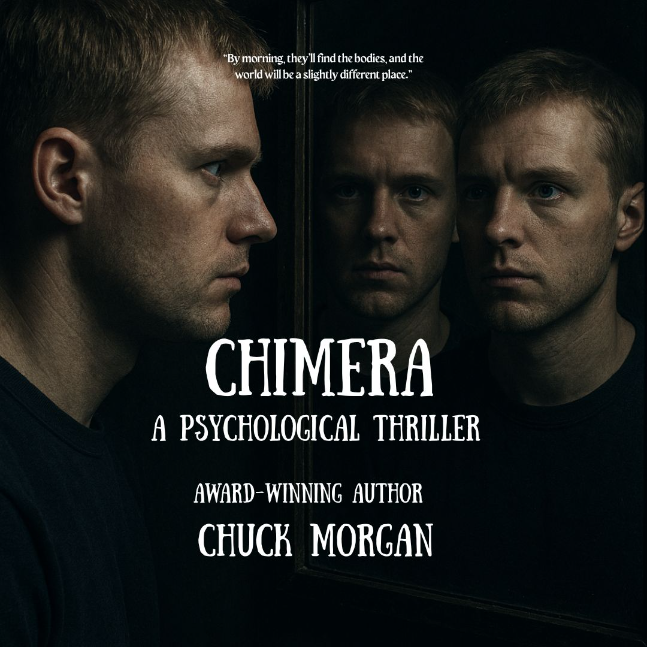
NEW PSYCHOLOGICAL THRILLER BY AWARD-WINNING AUTHOR CHUCK MORGAN
CHIMERA DELIVERS A CHILLING PSYCHOLOGICAL THRILLER WHERE IDENTITY
FORENSICS AND MURDER SPIRAL INTO ONE. NEW RELEASE EBOOK PRICE ONLY…$0.99 FOR A LIMITED TIME.
A tense and cerebral novel by award-winning Chuck Morgan blurs the line between hunter and hunted inside a meticulously staged nightmare.
New York, NY, February 26, 2026 — Author Chuck Morgan unleashes a gripping psychological thriller with Chimera, a Kindle edition that fuses forensic precision with unsettling suspense. The novel draws readers into a cold case resurgence where ritualistic murder scenes reveal chilling order rather than chaos and where the most dangerous question is not who the killer is but what the killer is becoming.
Chimera follows FBI Special Agent Dirk Trainor as a decades-old spiral of violence resurfaces with terrifying clarity. Each crime scene is staged with meticulous design, marked by a spiral cross signature that grows more refined with every kill.
As the investigation deepens, the evidence points inward. Adoption records surface. Fugue like
visions haunt Trainor. A DNA result fractures everything he believes about himself and his past. Alongside his partner Jill Quarters, Trainor races to stop the next murder while confronting the possibility that identity itself may be the missing link binding the crimes together.
Morgan crafts a narrative that balances procedural accuracy with psychological depth. The novel explores how self-control separates precision from chaos and how obsession can masquerade as order. Through layered revelations, Chimera examines the fragility of identity and the terrifying implications of inherited violence and hidden bloodlines.
What sets Chimera apart is its fusion of forensic detail and philosophical unease. The spiral is not merely a signature but a symbol of control ritual, and descent. Each chapter tightens the pattern, pulling readers deeper into a labyrinth where geometry becomes language and murder becomes message. Morgan’s prose is sharp, controlled, and relentless, mirroring the killer’s own meticulous discipline.
The inspiration behind Chimera stems from the idea that the most unsettling crimes are not driven by
impulse but by design. Morgan challenges readers to consider whether monsters are born, constructed, or uncovered through truth.
The book is now available. Secure your copy here: https://www.amazon.com/dp/B0GG5TXDSH
For interview requests, or additional information, please contact:
Chuck Morgan
Email: cmorganwriter@hotmail.com
Can The Juxtaposition of Setting and Morality Elevate Crime Narratives?
Can The Juxtaposition of Setting and Morality Elevate Crime Narratives?
Chuck Morgan, Crime Fiction Author
It's fascinating to consider how the interplay between setting and morality can enhance crime narratives in profound ways. When you explore the stark contrasts between a character's environment and their ethical dilemmas, you often uncover deeper motivations and tensions that drive the plot. This blog post will examine how the juxtaposition of a chilling backdrop with complex moral decisions not only heightens suspense but also invites you to challenge your perceptions of right and wrong in crime storytelling.
The Power of Place: How Setting Influences Crime Perception
Setting plays a pivotal role in shaping your understanding of crime narratives. It anchors the story within a recognizable framework, driving your perception of morality and ethical dilemmas. Urban landscapes may evoke chaos and anonymity, while secluded rural towns suggest oppressive secrets lurking beneath a facade of tranquility. Each environment shapes not only the narrative arc but also how you identify with the characters involved, enhancing the emotional stakes and tension throughout the story.
Geographic Context and Criminal Behavior
Your understanding of criminal behavior is often framed within a geographical context. Studies show that certain neighborhoods may breed specific types of crime, influenced by socio-economic conditions, community structures, and even local law enforcement practices. For instance, urban areas with high poverty rates often report elevated instances of theft and violent crime, while affluent suburbs might experience property crimes driven by opportunity rather than desperation. This geographic lens shapes not only criminality but also your reactions to it, deepening your engagement with the narrative.
Atmosphere and Emotional Resonance in Crime Stories
The atmosphere of a crime story is necessary for establishing emotional resonance. Elements like weather, architecture, and local culture can evoke feelings ranging from dread to nostalgia, affecting how you connect with characters and narratives. For instance, a dark, rainy setting can amplify feelings of despair, while bright, sunlit days create a stark contrast to violent events, heightening the emotional impact of the crime. As you immerse yourself in these tales, the atmosphere underlines the stakes, guiding your responses to the unfolding drama.
Delving deeper into atmosphere, you can see how it serves as an emotional landscape that enhances narrative tension. A tale set in a crumbling, desolate cityscape might not only mirror the internal turmoil of characters but also amplify your sense of dread for their fates. Crime narratives that leverage the surrounding environment weave emotions tightly into the storyline, using soundscapes—the echoing footsteps in an empty alley or the distant siren call of police cars—to build suspense. As you navigate these crafted atmospheres, every sensory detail enriches your understanding of the characters' moral journeys and their eventual choices.
Moral Ambiguities: Navigating Right and Wrong in Crime Narratives
Crime narratives thrive on moral ambiguities, presenting complex situations that challenge your perception of right and wrong. These stories compel you to question ethical boundaries and confront the uncomfortable realities of justice, suggesting that morality often exists on a spectrum rather than a rigid binary. Engaging with the nuanced choices characters make, you might empathize with actions that, in another context, you would deem unforgivable. This exploration of moral gray areas enriches the narrative, prompting discussions about ethics in society.
Characters as Moral Compasses: Antiheroes and Their Impact
Antiheroes serve as your guides through the murky waters of morality within crime narratives, often blurring the lines between virtue and vice. Their flawed nature invites you to reconsider traditional heroism, as you find yourself drawn to their struggles and motivations. These characters embody relatable complexities, providing a lens through which you can explore your own ethical dilemmas and societal norms. The depth of their character arcs influences your understanding of morality, allowing the narrative to resonate on a personal level.
The Role of Societal Norms in Shaping Morality
Societal norms play a fundamental role in shaping the moral landscape of crime narratives, guiding characters' decisions and actions. From the unwritten rules of a community to the cultural influences that dictate acceptable behavior, these paradigms inform your perception of justice and ethics. When a character operates outside these boundaries, you witness the tension that arises, prompting you to reflect on the impact of societal expectations on their choices. The resulting conflict often reveals how quickly morality can shift in response to growing cultural contexts.
In crime narratives, societal norms dictate the moral framework within which characters operate, coloring their actions with motivations and biases. In a setting where loyalty to family or gang supersedes legal obligations, your understanding of right and wrong is challenged. An antihero may justify their criminal behavior to provide for their loved ones, interesting you to weigh their intentions against the consequences of their actions. This interplay highlights that morality is not static; it shifts with context and culture, reminding you that the boundaries of right and wrong are often more ambiguous than they seem.
The Tension Between Setting and Morality: Crafting Complex Narratives
Exploring the tension between setting and morality unveils the layers that contribute to interesting crime narratives. A well-crafted story places characters in environments that directly influence their ethical decisions, creating a charged atmosphere ripe for conflict. As you dissect the narrative, note how elements like urban decay or pastoral tranquility shape moral perspectives, providing insight into the characters' motivations and dilemmas. This intricate interplay not only enhances plot development but also serves as a mirror reflecting societal values and challenges.
Contrasting Locations and Their Ethical Implications
Contrasting locations—think gritty inner cities versus peaceful suburbs—amplify ethical implications in crime narratives. Each setting inherently possesses its own moral fabric, shaping how characters respond to dilemmas. An anti-hero from a troubled background may find justification for their actions in harsh surroundings, while the same act in a serene neighborhood might be viewed as unforgivable. Your understanding of the setting adds depth to ethical considerations, prompting reflection on how the environment influences behavior.
The Reader's Journey Through Moral Complexity
As you navigate the narrative, the journey through moral complexity becomes an engaging experience, prompting you to question your values. Characters often wrestle with decisions that expose their shades of gray, interesting you to empathize even with dubious figures. Through this journey, writers create a landscape where the right choice isn’t always clear, urging you to consider the consequences of actions shaped by circumstance. This tension elevates your reading experience, as grappling with moral intricacies encourages introspection and dialogue about ethical dilemmas.
Your exploration of moral complexity not only enhances the reading experience, but it also fosters a profound connection between you and the narrative. Characters faced with hard choices against contrasting settings impel you to evaluate your own moral compass, often blurring the lines between right and wrong. A story centered on a heist where the heist’s justification shifts based on your perspective—offering insights into socioeconomic disparities or personal desperation. As you engage with these complex layers, you're encouraged to reflect on your own beliefs, making the narrative not just a story, but a thought-provoking exploration of morality amidst adversity.
The Effect of Juxtaposition on Audience Engagement
The interplay between setting and morality plays a pivotal role in gripping audiences' attention. When a crime narrative showcases stark contrasts—such as a peaceful suburban neighborhood paired with a sudden act of violence—it creates an immediate tension that compels you to turn the page or press play. This unexpected clash engages not only your curiosity but also your emotional investment, as you navigate the complexities of human behavior against a backdrop that feels familiar yet threatening. The result is a more immersive experience that resonates long after the story concludes.
Emotional Responses and the Viewer’s Investment
Your emotional reactions are heightened in narratives where the setting dramatically contrasts with moral dilemmas. As you witness characters grappling with choices in idyllic locations that are tainted by sinister motives, feelings of shock, empathy, or even anger can emerge. This dynamic not only enriches your connection with the characters but also deepens your engagement, making each plot twist and moral quandary hit harder than if the story unfolded in a more predictable context.
Encouraging Critical Thought Through Narrative Discrepancies
Juxtaposition invites you to ponder the intricacies of morality and justice within a story. When a crime happens in a setting that typically embodies safety or ideals, it prompts you to question your preconceived notions about right and wrong. This discrepancy can catalyze a deeper discussion about societal norms, ethical dilemmas, and the complexity of human nature, encouraging viewers to think critically about the narratives they consume.
Exploring these narrative discrepancies reveals the multi-dimensional nature of morality. For instance, a film that portrays a respected figure committing a crime in their pristine community prompts you to reevaluate the dichotomy of heroism and villainy. It helps you discern that within every perfect scenario, flaws and darkness may lurk beneath the surface. This reflection not only broadens your understanding of justice but also provokes meaningful discussions about accountability, complicity, and societal values, ultimately elevating your engagement with the narrative.
Practical Applications: Writing Techniques for Effective Juxtaposition
Employing juxtaposition in crime narratives involves more than just setting a grim scene against ethical dilemmas. To effectively engage your readers, focus on contrasting environments that reflect or challenge your characters' moral choices. Develop settings that resonate emotionally, using sensory details to enhance the conflict between right and wrong. Position your protagonist in familiar surroundings that grow into dangerous territories, emphasizing their internal struggle. By intertwining vivid descriptions with nuanced characterizations, you can create an immersive experience that drives the moral weight of your story.
Strategies for Integrating Setting and Morality
Consider using symbolic settings that mirror your character's moral journey. For instance, a bustling urban landscape can represent chaos and temptation, whereas a serene countryside may embody tranquility and moral clarity. You can also employ contrasting timelines where characters confront their past decisions within different environments. Furthermore, dialogue can serve as an effective tool; characters' conversations about their surroundings often reveal their ethical stances, illuminating the relationship between place and personal truth.
To wrap up
Following this exploration, you can see how the juxtaposition of setting and morality can indeed elevate crime narratives. By placing moral dilemmas against vivid backdrops, you enhance the emotional stakes, encouraging deeper engagement with the characters and their choices. This interplay not only enriches the story but invites you to reflect on the broader implications of morality within varying contexts, making your reading experience both thought-provoking and immersive.
https://chuckmorganbooks.com
What Role Does Realism Play in Crafting Crime Fiction Universes?
What Role Does Realism Play in Crafting Crime Fiction Universes?
Chuck Morgan, Crime Fiction Author
With the right mix of authenticity and imagination, realism becomes vital in enhancing your crime fiction universe. As you build your narrative, this element serves to bridge the gap between reality and fiction, making your story more engaging and believable for readers. By incorporating realistic details, relatable characters, and plausible scenarios, you empower your audience to immerse themselves in the intricate world you’ve created. In this blog post, you’ll discover how verisimilitude not only enriches your narrative but also elevates the reading experience, making your crime story more interesting.
The Art of Authenticity in Crime Narratives
Defining Realism in Fiction
Realism refers to the semblance of truth that a work of fiction possesses. In crime narratives, this means creating scenarios, characters, and dialogue that resonate with your readers as being real, even within the bounds of your imaginary universe. The believability of your story hinges on how effectively you can weave a sense of authenticity through meticulous research, character development, and intricate plotting. Understanding and implementing realism can elevate your crime fiction from merely entertaining to truly gripping.
The Intersection of Realism and Storytelling
Authenticity in crime fiction emerges from the interplay between realism and storytelling. Both elements must coalesce seamlessly to create an engaging narrative that captivates readers. When you integrate accurate depictions of the criminal justice system, societal issues, and forensic details with compelling character arcs and gripping plots, you forge a powerful connection with your audience that keeps them invested in your story. This balance not only enhances the narrative but also promotes deeper reflections on morality and human nature.
Creating an effective intersection between realism and storytelling invites you to explore the nuances of your plot while grounding it in recognizable truths. Showing the complexities of a detective's personal life alongside a well-researched portrayal of forensics can make your character more relatable and your narrative more interesting. The art lies in striking that dynamic balance; too much realism risks dragging your story down, while too much fiction can detach readers from the emotional weight of the situations depicted. By harmonizing these components, you can elevate your crime narrative to resonate with reality while still offering escapist entertainment.
Crafting Credible Characters: The Role of Realism
Building characters that resonate with readers requires a grounding in realism. Whether protagonists or antagonists, your characters should reflect the complexities of real people. Understanding their backgrounds, flaws, and emotional landscapes allows for multidimensional portrayals that captivate and engage. Characters should possess unique traits, relatable struggles, and moral ambiguities that mirror genuine human experiences, making them more believable and ultimately enhancing the authenticity of your crime fiction universe.
Grounding Protagonists and Antagonists in Reality
To make your protagonists and antagonists resonate, anchor them by considering their life experiences and psychological profiles. Authenticity in their backstories creates depth and relatability. You might draw inspiration from real-life individuals or case studies, providing a foundation upon which their motivations and decisions are built. Characters shaped by tangible emotions, aspirations, and failures will feel alive and significant to the reader.
Authentic Motivations: The Key to Relatable Crimes
Genuine motivations drive your characters to commit crimes that readers can understand, if not sympathize with. When a killer’s backstory reveals an interesting reason for their actions, it transcends mere evil and transforms them into a figure shaped by circumstance. Drawing from real societal issues, like economic hardship, personal trauma, or systemic injustice, allows you to craft characters whose crimes stem from relatable, believable motivations rather than contrived plot devices. This not only adds layers to your narrative but also invites readers to grapple with moral dilemmas, enhancing the emotional impact of your story.
Consider how real-life events often blur the lines between right and wrong. Characters who engage in criminal behavior because of desperation, unrequited love, or perceived betrayals tap into universal human experiences. For instance, a once-thriving businessperson turned thief could reflect the struggles many face during economic downturns, evoking empathy for his plight even while condemning his actions. These authentic motivations not only amplify the drama but foster a deeper connection between your readers and the fictional world you’ve created, ensuring their investment in the characters and the unfolding narrative.
Setting the Scene: Environmental Realism
Your setting serves as the backbone of the narrative, offering a rich backdrop that can either further the plot or deepen character development. In crime fiction, the environment can be as influential as the characters themselves. A gritty urban landscape, a desolate rural area, or a bustling city can all evoke different moods, shape characters’ choices, and impact the unfolding of events, making it vital to depict these places with authenticity.
The Importance of Place in Crime Fiction
Creating Atmosphere Through Realistic Detail
The fine details of your setting help establish a vivid atmosphere that pulls readers into your world. Elements like weather, sound, and scent can transform ordinary locations into scenes charged with tension or foreboding. Incorporating specifics about a neighborhood, such as the graffiti on the walls or the chatter of locals, renders the scene more palpable.
The Reader's Trust: Building Suspension of Disbelief
Establishing a solid foundation of trust with readers enhances their suspension of disbelief, allowing them to immerse themselves completely in the world you've constructed. Every detail, from setting and character development to the internal logic of the plot, must work in harmony. Avoid jarring inconsistencies that could disrupt their engagement, ensuring that readers remain invested in the unfolding narrative. When they feel secure in the story's reality, they're more likely to accept even the most outrageous plot twists without question.
Techniques for Earning Reader Confidence
Employing strategic techniques can foster reader confidence. Detailed character backstories add depth, while research into the crime elements can provide authenticity. Use realistic dialogue to reflect true human interaction and maintain consistency in character behavior and motivations. A well-crafted plot that respects its own rules keeps readers engaged, while nuanced descriptions of scenes can create vivid imagery, allowing them to visualize and relate to the narrative on a personal level.
Consequences of Breaking Verisimilitude
Breaking the established realism can shatter the reader's immersion, leading to disconnection and disappointment. If a character behaves in a way that contradicts their development or the setting becomes implausible, readers may question the story's integrity. Such lapses can cause negative reviews or loss of readership, as trust once established is difficult to regain. A single glaring inconsistency can echo throughout the story, prompting readers to scrutinize every element instead of enjoying the experience.
When realism is compromised, it can cause a marked shift in audience engagement. Readers might become more critical, dissecting every plot development instead of embracing the narrative's flow. For instance, in crime fiction, a detective achieving an impossible feat without explanation can lead to frustration. Once readers perceive a lack of authenticity, they may dismiss the entire narrative as far-fetched, undermining the very essence of the story. Maintaining consistent verisimilitude not only solidifies reader trust but also reinforces the emotional connection necessary for an interesting crime fiction experience.
Beyond Crime: Ethical Implications of Realism
Crime fiction often transcends mere entertainment, leading you to contemplate the moral and ethical dilemmas surrounding crime and justice in society. Realistic portrayals of crime can serve as a mirror reflecting societal values and failings, prompting the viewer to examine the deeper implications of characters’ actions and motivations. As authors create complex narratives rooted in realism, they confront the reader with questions that challenge preconceived notions of guilt, innocence, and justice.
Social Responsibility in Crime Writing
Your role as a crime writer comes with significant social responsibility. Authentic storytelling can shape public perceptions about crime, justice, and those involved in the legal system. By portraying characters with depth and humanity, you can help to counter stereotypes and present nuanced views of criminality, offering insight into the underlying reasons behind behaviors that society often stigmatizes.
Reflecting Societal Issues through Authentic Narratives
Engaging with broader societal issues adds depth to your crime narratives, inviting readers to connect emotionally and intellectually with the story. By intertwining themes such as poverty, racism, or mental health into your plots, you elevate the discussion around these topics. It becomes more than just a story about crime; it opens a dialogue about the systemic problems afflicting society, making crime fiction a vehicle for social awareness.
Crime fiction allows you to explore pressing societal issues while weaving an interesting narrative. By reflecting these themes in your own writing, you not only entertain but also educate, prompting readers to consider how societal factors influence criminal behavior. In this way, fiction becomes a powerful tool in advocating for change, fostering empathy and understanding amidst the complexities of the human condition.
Summing up
Realism serves as the backbone of engaging crime fiction universes, interesting the reader to immerse themselves in the narrative. By ensuring that characters, settings, and plot twists resonate with authenticity, you enhance your readers' emotional investment and belief in the story's reality. This connection is vital for creating tension and suspense, allowing you to explore the darker realms of human nature while keeping your audience captivated. Ultimately, the attention to detail and realism in your crime fiction enhances its impact and memorability.
https://chuckmorganbooks.com
How Do Setting and Atmosphere Influence Crime Stories?
How Do Setting and Atmosphere Influence Crime Stories?
Chuck Morgan, Crime Fiction Author
It’s vital to understand that the setting and atmosphere in crime stories play a significant role in shaping the narrative. By immersing yourself in the physical and emotional landscapes of these tales, you can appreciate how they enhance tension, character development, and plot progression. Whether it's the shadowy alleys of a bustling city or the eerie silence of a deserted countryside, these elements create a backdrop that influences your perception of guilt, innocence, and suspense.
The Importance of Setting in Crime Stories
A well-crafted setting serves as a backbone for crime stories, influencing mood, tone, and the overall narrative structure. It not only creates a backdrop for the action but also shapes the reader's perception of events. When you immerse yourself in a vividly depicted world, your emotional connection to the story deepens, enhancing your experience and engagement with the plot and characters.
Establishing Context and Background
At the beginning of a crime story, the setting establishes the context and background that frames the unfolding drama. Whether it's a gritty urban landscape or a secluded rural town, the environment provides meaning to characters' actions and motives. You gain insight into societal norms, cultural values, and potential dangers that influence the storyline, helping you better understand the characters involved.
Impact on Character Development
Among the many effects that setting has on crime stories, its impact on character development is especially significant. The environment often reflects and shapes the internal struggles and motivations of the characters within the narrative.
Considering the complexities of your characters, the setting can serve as a mirror to their inner conflicts and ambitions. For instance, a detective working in a corrupt city may become hardened and cynical, while a protagonist in a tranquil village might embody innocence. Your understanding of your characters deepens as you witness how their environments influence their choices and growth throughout the story. Hence, setting not only contextualizes events but also enriches the emotional landscape of character dynamics.
Atmosphere and Mood in Crime Narratives
It is crucial to recognize that atmosphere and mood play a pivotal role in shaping the emotional experience of crime narratives. These elements create the backdrop against which characters operate and crimes unfold, influencing how you perceive their motivations and dilemmas. An eerie, suspenseful setting can heighten your sense of unease, pulling you deeper into the story and making each plot twist feel more impactful.
Creating Tension and Suspense
Creating tension and suspense in crime stories relies heavily on the atmosphere you establish. By using descriptive language to evoke fear, uncertainty, and anticipation, you can keep readers on the edge of their seats. Whether it's through dark alleyways, stormy weather, or foreboding silence, a well-crafted atmosphere can build momentum, enticing you to explore further into the narrative.
Influencing Reader Engagement
The atmosphere of a crime story significantly influences your engagement as a reader. The right mood can draw you in, making you invested in the characters and their fates, while a poorly executed atmosphere might leave you feeling disconnected and uninterested. As you immerse yourself in the setting, your emotional responses become intertwined with the narrative, enhancing your overall experience.
Understanding how atmosphere affects reader engagement allows you to appreciate the depth of crime narratives. By immersing yourself in an interesting setting, you not only become an observer, but also an active participant in the unfolding drama. When tension-filled environments challenge your perceptions, you are more likely to empathize with characters' struggles, making the story resonate on a personal level. This bond between atmosphere and engagement ultimately enriches your reading experience, leading you to expect each new revelation with heightened interest.
Case Studies: Setting and Atmosphere in Notable Works
Some of the most impactful crime stories leverage setting and atmosphere to elevate their narratives. The following case studies illustrate how critical these elements are:
- "The Hound of the Baskervilles" by Arthur Conan Doyle—The eerie moors set the stage for the supernatural elements, encapsulating the tension throughout the investigation.
- "Gone Girl" by Gillian Flynn—The suburban backdrop contrasts the dark psychological elements, enhancing the narrative's complexity.
- "The Silence of the Lambs" by Thomas Harris—The gothic atmosphere of the mental institution amplifies the horror and psychological intrigue.
- "The Girl with the Dragon Tattoo" by Stieg Larsson—The bleak Scandinavian landscape mirrors the chilling undertones of the investigation.
Classic Crime Literature
Classic crime literature often employs atmospheric settings to create suspense and draw readers deeper into the narrative. The fog-filled streets of Victorian London in "The Adventures of Sherlock Holmes" set an ominous tone, making every case more thrilling. Such meticulous detailing of the environment adds immeasurable depth to the storytelling, proving that the surroundings can be just as important as the characters themselves.
Contemporary Examples
The modern crime genre showcases innovative use of setting and atmosphere to enhance suspense. Authors today continue to explore diverse environments that reflect the themes of their stories, making the context integral to their plots.
Examples like "Big Little Lies" by Liane Moriarty use the idyllic yet deceptive coastal town to highlight darker community secrets, while Tana French’s "In the Woods" incorporates lush Irish landscapes that juxtapose beauty with haunting memories. These contemporary works use vivid atmospheres, allowing you to fully immerse yourself in the narrative and feel the tension inherent in the setting, amplifying the overall impact of the crime story.
The Role of Locale: Urban vs. Rural Settings
For crime stories, the setting often shapes not only the narrative but also the motivations of characters involved. In urban environments, the pace and density create unique pressures and social dynamics that can lead to crime, while rural settings might evoke different issues, such as isolation and limited resources, influencing criminal activities. Understanding these contrasts can deepen your appreciation for the narrative layers within crime stories.
Urban Crime Dynamics
An urban setting enhances the complexity of crime dynamics, often driven by anonymity, socio-economic disparities, and a vibrant nightlife. These elements create fertile ground for criminal activities ranging from petty theft to organized crime. In addition, law enforcement and community initiatives can act as both a deterrent and a factor in the escalation of crime, making urban locales particularly engaging backdrops for your crime stories.
Rural Crime Challenges
Rural crime presents distinct challenges characterized by isolation and fewer resources. This environment can lead to under reported incidents, as communities may rely on informal networks for justice or resolution instead of formal law enforcement. A lack of immediate response services adds an interesting dimension to crime in the countryside, often resulting in unique stories that explore themes of mistrust and self-reliance.
Understanding rural crime challenges involves recognizing the impact of geography, population density, and community resources on criminal behavior. While urban areas may see crime spurred by anonymity, rural regions often grapple with isolation that hinders reporting and resolution. You may find that these stories highlight the interpersonal dynamics that arise when communities deal with crime, revealing deep-seated tensions or alliances that influence how justice is pursued in less populated locales.
Cultural Influences on Setting and Atmosphere
Once again, culture plays a vital role in shaping the settings and atmospheres of crime stories. Your readers will connect more deeply with narratives that reflect familiar cultural elements, from dialects and customs to social norms and values. These cultural influences create an immersive experience, allowing readers to feel the weight of the atmosphere as they navigate through interesting plots. As you weave these aspects into your crime stories, the authenticity and relatability will resonate more with your audience, enhancing their emotional engagement with the narrative.
Regional Idiosyncrasies
Regional idiosyncrasies, those unique traits significantly affect how crime stories unfold. Each location has its own distinct customs, music, cuisine, and even attitudes toward law enforcement, which can influence character motivations and actions. By carefully incorporating these idiosyncrasies into your narrative, you enrich the setting and offer your readers a vivid and relatable backdrop. This added layer of realism can create more nuanced characters and situations, enhancing the overall storytelling experience.
Global Perspectives
Besides regional influences, global perspectives also shape the atmosphere of crime narratives. Exploring crime through a global lens allows you to draw parallels between different societies, highlighting universal themes such as justice, morality, and societal decay. These perspectives enrich your storytelling by introducing diverse cultural practices and motivations, allowing for a more complex exploration of crime and consequence.
Because of the interconnectedness of today's world, many readers are increasingly aware of global issues and diverse cultural narratives. Incorporating these perspectives into your crime stories not only broadens the scope of your narrative but also fosters a deeper understanding of various societal issues. By showcasing the similarities and differences in crime across cultures, you can engage your audience in a thought-provoking dialogue that challenges their assumptions and encourages them to reflect on the broader implications of crime in a global context.
Crafting the Ideal Setting and Atmosphere
Now that you understand the significance of setting and atmosphere in crime stories, it's time to examine how to create the ideal backdrop for your narrative. The right environment amplifies tension, shapes characters, and immerses readers in your world. Whether you choose urban sprawl or a secluded village, ensure your setting resonates with the themes of your story, enhancing the emotional impact and suspense that readers crave.
Techniques for Writers
For effective world-building, start by visualizing your setting. Use sensory details to paint a vivid picture, incorporating sights, sounds, and smells that evoke emotion. Create a mood that aligns with your narrative, whether it's eerie silence in a fog-laden alley or the bustling noise of a crime-ridden city. By weaving these elements into your storytelling, you will keep your readers fully engaged.
Common Pitfalls to Avoid
An oversight in setting can diminish the impact of your crime story. Avoiding clichés, inconsistencies, and irrelevant details is imperative to maintain authenticity and reader immersion.
To effectively sidestep these pitfalls, ensure your setting feels integral to the plot rather than an afterthought. Clichéd environments can make your story predictable and uninspiring, so strive for originality in your choices. Remain consistent with the specifics of your setting; contradictions can lead to reader confusion and disengagement. Finally, focus on relevant details. Overloading your narrative with unnecessary information can dilute its effect and distract from the critical elements of your crime story.
Summing up
To wrap up, understanding the role of setting and atmosphere in crime stories enhances your appreciation of the narrative. These elements shape characters’ motivations, influence the unfolding of events, and evoke emotional responses. By immersing yourself in the specific details of time and place, you can better grasp how these factors drive tension and suspense, making the story more engaging. This awareness not only deepens your connection with the plot, but also enriches your overall reading experience in the crime genre.
https://chuckmorganbooks.com
What Are the Common Tropes in Crime Fiction and How Can You Avoid Them?
What Are the Common Tropes in Crime Fiction and How Can You Avoid Them?
Chuck Morgan, Crime Fiction Author
Many aspiring crime writers dive headfirst into familiar storytelling conventions, often called tropes, which can unintentionally limit their creativity. In this post, we will explore some of the most common tropes in crime fiction, from the classic detective archetype to the improbable plot twists and provide strategies you can implement to steer clear of clichés. By understanding these elements, you can craft interesting narratives that captivate your audience and provide fresh, engaging stories. Join us as we probe into the nuances of crime fiction and how to create original content.
Defining Tropes in Crime Fiction
The term “tropes” in crime fiction refers to common themes, motifs, or narrative devices that frequently appear within the genre. These elements can serve as shortcuts for storytelling, helping to convey complex ideas or emotions swiftly. Relying too heavily on familiar tropes can also lead to predictability, undermining your narrative's originality. To create interesting crime fiction, it’s vital to recognize these tropes and learn how to innovate beyond them.
Common Tropes Explained
After understanding the definition of tropes, it’s important to explore the most prevalent ones in crime fiction. Examples include the "hard-boiled detective," the "innocent wrongfully accused," and the classic "twist ending." These familiar constructs can draw readers in but may also limit your creativity. By pinpointing these common tropes, you can think critically about how to change or subvert them in your own writing.
The Impact of Tropes on Reader Engagement
Besides providing a framework for your narrative, tropes also shape the reader's expectations. When you use tropes effectively, they can enhance engagement, allowing readers to invest in the story. However, overused tropes can lead to disinterest, as audiences may feel they have seen it all before. Balancing familiarity with innovation is key to maintaining your readers' attention and curiosity.
While traditional tropes can serve as a gateway for readers, they can also become a double-edged sword. When you rely too heavily on familiar patterns, you risk creating a narrative that feels stale or uninspired. To keep your audience enthralled, consider how you can twist or reinvent these tropes, offering fresh perspectives or unexpected developments that surprise and delight your readers. Engaging with tropes thoughtfully allows you to build a connection with your audience, making your work memorable in a crowded genre.
The Detective Persona
Some crime fiction writers fall into the trap of creating overly familiar detective personas. While readers appreciate the comfort of a recognizable character, relying too heavily on these archetypes can lead to predictability and stagnation in your narrative.
Stereotypes of the Detective Character
Detective characters often embody certain stereotypes that can feel repetitive. Consider the following common traits:
- Hard-boiled loner
- Alcoholic genius
- By-the-book rookie
- Quirky sidekick
- Haunted past
This can lead to a lack of originality in your storytelling.
Stereotype | Why It’s Cliché |
| Hard-boiled loner | Overused in noir fiction |
| Alcoholic genius | Reinforces negative stereotypes |
| By-the-book rookie | Presents a predictable growth arc |
| Quirky sidekick | Often distracts from the main plot |
| Haunted past | Can overshadow character development |
Avoiding Clichés in Character Development
One effective way to steer clear of clichés in your detective persona is to explore unexpected backgrounds and motivations. Put thought into how these can influence your character's approach to solving crimes.
Because of the prevalence of stereotypes, reimagining your detective’s backstory can provide fresh perspectives. Think outside traditional boundaries by incorporating unique experiences, diverse cultural backgrounds, or unconventional career paths. Allow your character to display a wider range of emotions and reactions, creating a fully fleshed-out persona whose choices feel authentic and engaging to your readers.
The Role of the Antagonist
Any well-crafted crime story requires an interesting antagonist who drives conflict and engages the reader. Your antagonist is not merely a villain but a character whose motivations and actions challenge your protagonist, creating tension and intrigue. By carefully developing this character, you elevate the stakes of your narrative and keep your audience guessing about their next move.
Typical Villain Archetypes
One of the common mistakes in crime fiction is relying on typical villain archetypes, which can make your story predictable. Here are some overused examples:
- The Mastermind - a genius plotting perfect crimes
- The Reluctant Criminal - driven by circumstance rather than choice
- The Crazed Psychopath - without clear motivation
- The Corrupt Authority - bending laws for personal gain
- The Femme Fatale - seductively dangerous
This over-reliance on archetypes can make your antagonist feel flat and unoriginal.
Crafting Unique Antagonists
The secret to a memorable antagonist is to craft a character that defies typical conventions and resonates with readers. This involves developing complex motivations, personal histories, and relatable flaws that make them realistic and intriguing.
In fact, your antagonist should evoke a mix of emotions, fear, empathy, and even admiration. By giving your antagonist an interesting backstory and clear motives that challenge societal norms or personal ethics, you create a character that represents a true foil to your protagonist. This depth not only enriches the narrative but also invites the reader to explore the moral gray areas alongside your characters.
Plot Structure and Pacing
Not every crime story needs to follow a predictable trajectory. Rather than adhering strictly to conventional plot structures, consider how variations in pacing and timing can enhance your narrative. To maintain reader engagement, think about how you can manipulate the rhythm of your unfolding mystery. By weaving in unexpected twists and turns, you can elevate the tension and keep your audience guessing until the very end.
The Classic Whodunit Format
About the classic whodunit, it typically follows a clear linear progression where readers uncover clues alongside the detective. While this familiar structure can be comforting, it can become cliché if used without adaptation. To stand out in the crowded genre, you must innovate within this framework, whether by introducing unique twists or unexpected character arcs that challenge the traditional narrative.
Innovations for Fresh Storytelling
Fresh storytelling techniques can breathe new life into the crime genre. By experimenting with non-linear timelines, multiple perspectives, or unreliable narrators, you can create a more dynamic and immersive reading experience. This encourages readers to engage with the story and form their own theories, making the eventual resolution even more gratifying.
Innovations in crime fiction can take various forms, such as blending genres or incorporating modern technology into your plots, like social media or data analytics, which can provide fresh avenues for investigation. Explore character-driven narratives that examine deeper into psychological complexities rather than focusing solely on the mystery. Engaging with contemporary social issues can also set your story apart while reinforcing the relevance of crime fiction in today’s society. By embracing these innovative elements, you’ll not only captivate your audience but also contribute to a more expansive and transformative literary landscape.
Setting and Atmosphere
Establishing a gripping setting and atmosphere is necessary in crime fiction to immerse your readers in the world you've created. A well-crafted environment can amplify tension and enhance emotional impact, drawing your audience deeper into the story. You can use various sensory details to bring your scenes to life, making the reader feel the weight of uncertainty that permeates through every interaction.
Overused Settings in Crime Fiction
Below are some common backdrops in crime fiction that may leave your story feeling clichéd. The traditional dark alley, the isolated cabin, or the gritty urban landscape can become predictable. These settings, while effective in their own right, can easily blend, causing your narrative to lose its unique edge. Avoid relying solely on these overexposed environments, as they may hinder the originality of your plot.
Creating interesting and Unconventional Environments
Developing unique and captivating settings can enrich your storytelling. Consider environments that are not typically associated with crime fiction, such as serene suburban neighborhoods, vibrant cultural festivals, or unconventional locations like a museum or an amusement park. By juxtaposing your crime elements with these unexpected backdrops, you can create a striking contrast that adds depth to your narrative.
This approach encourages readers to view familiar settings through a new lens, making your story more memorable. For instance, placing a crime scene amid a lively celebration can create a sense of shocking disparity. Use historical or thematic elements tied to your location to enhance the atmosphere. Innovation in setting can not only surprise your audience but also enrich character development, helping to establish motives and deepen the emotional resonance of your narrative.
Dialogue and Language
All crime fiction thrives on the interplay of dialogue and language, shaping characters and propelling the plot. As you craft your story, pay attention to how characters communicate—this can expose their motives, emotions, and relationships. Effective dialogue not only conveys information but also enhances the realism of your narrative, ensuring readers stay immersed in the world you've created.
Common Dialogue Tropes
Along the journey of writing, you may encounter several common dialogue tropes, such as excessive exposition or stereotypical catchphrases. Many authors fall into the trap of making conversations solely about advancing the plot, stripping away the authentic voice of the characters. Avoid clichés and instead focus on ensuring each character has a distinct way of speaking that reflects their personality and background.
Writing Authentic and Engaging Dialogue
Successful crime fiction relies on the ability to create authentic and engaging dialogue that resonates with readers. Avoid stilted conversations by allowing your characters to express themselves naturally, incorporating their unique quirks and perspectives. Use subtext to convey deeper emotions and vary the rhythm of exchanges to maintain interest. Show, rather than tell, through the nuances in speech—this will bring your characters to life in a way that resonates with your audience.
Authentic dialogue requires keen observation of real-life conversations and the ability to adapt that experience into your writing. Listen to how people speak, noting distinct speech patterns, colloquialisms, and pauses. Allow your characters to interrupt each other, disagree, or engage in small talk, creating a more dynamic interaction. By writing dialogue that reflects true human behavior, you invite readers to become invested in your characters, enhancing their emotional connection to your story.
Conclusion
Ultimately, understanding the common tropes in crime fiction allows you to craft a more engaging and original narrative. By consciously avoiding clichés like the lone detective or the overly simple motives, you can create multidimensional characters and plots that resonate with your audience. Challenge yourself to think outside the box, blending genres or incorporating unique twists, while staying true to the essence of the crime genre. This approach will not only enhance your storytelling, but also set your work apart in a crowded field.
https://chuckmorganbooks.com
What Role Does Foreshadowing Play in Crafting a Crime Narrative?
What Role Does Foreshadowing Play in Crafting a Crime Narrative?
Chuck Morgan, Crime Fiction Author
Foreseeing the outcomes of a story can significantly enhance your reading experience, especially in crime narratives. Foreshadowing serves as a subtle tool, guiding your expectations and enriching the plot's tension. By dropping hints and clues throughout the narrative, authors can prepare you for impending twists and revelations, making the eventual outcome more satisfying. Understanding how foreshadowing operates allows you to appreciate the intricacies of storytelling and helps you develop a deeper connection with the characters and their journeys.
Understanding Foreshadowing
A central element of an interesting crime narrative, foreshadowing subtly hints at events yet to unfold, building suspense and engaging the reader’s curiosity. It enhances the depth of the story, transforming mere events into a cohesive narrative filled with anticipation.
Definition and Importance
Against the backdrop of literary techniques, foreshadowing serves as a vital tool in storytelling. It provides readers with clues, enhancing their engagement with the plot. By weaving hints into the narrative, you can create an intricate web of expectations, ultimately leading to a more satisfying resolution.
Types of Foreshadowing
There are various types of foreshadowing, each contributing differently towards enhancing your crime narrative. Here are some common types:
- Direct Foreshadowing: Explicit hints or signs.
- Indirect Foreshadowing: Subtle, more nuanced indications.
- Symbolic Foreshadowing: Objects or themes that hint at future events.
- Dialogue Foreshadowing: Conversations revealing crucial information.
- Character Behavior: Actions that suggest future motivations.
Knowing these types empowers you to select the right method for your narrative's tone and theme.
| Type | Description |
| Direct Foreshadowing | Obvious hints about future events |
| Indirect Foreshadowing | Subtle clues woven into the narrative |
| Symbolic Foreshadowing | Objects or motifs showing future conflicts |
| Dialogue Foreshadowing | Conversations that subtly reveal outcomes |
| Character Behavior | Actions hinting at future motivations or twists |
Considering these types of foreshadowing can enhance your ability to create a dynamic narrative. By strategically applying them, you can craft a richer story experience that keeps your readers on their toes. Here’s a summary of what each type works best for:
- Direct for clear plot points.
- Indirect for intriguing mysteries.
- Symbolic for thematic depth.
- Dialogue for character-driven plots.
- Behavior for psychological insights.
Knowing how to use these types effectively can transform your crime narrative into an interesting experience.
Foreshadowing Techniques in Crime Narratives
Even in the most suspenseful crime narratives, foreshadowing techniques can elevate your storytelling. By subtly hinting at future events, you create an engaging atmosphere that keeps readers guessing. These techniques can appear as character behaviors, dialogue, or even setting details that hint at the unfolding mysteries. By mastering these tools, you ensure readers are not only entertained but also invested in the journey ahead.
Subtle Hints
Below the surface, subtle hints can significantly enhance your crime narrative. These understated clues, woven through dialogue or fleeting character actions, allow readers to piece together information without overshadowing the main plot. By employing this technique, you engage your audience's deductive skills, inviting them to form their own theories about the outcome, which adds layers to the crime story.
Ominous Symbols
Behind every gripping crime narrative lie ominous symbols that foreshadow events or moods. These symbols can be objects, locations, or recurring motifs that evoke a sense of danger or impending doom, preparing readers for crucial plot developments. For instance, a broken clock may symbolize fractured time, hinting at a pivotal event yet to unfold.
Ominous symbols not only enrich your narrative but also create a visceral connection for readers. These symbols can resonate with emotions, making your themes of tension and unease feel tangible. Incorporating such imagery allows you to reinforce the underlying messages of your crime story while setting the tone for dark and suspenseful moments. As your readers encounter these symbols, they become attuned to the escalating danger, deepening their engagement and anticipation for the unfolding plot twists.
The Impact of Foreshadowing on Reader Engagement
You may not realize it, but foreshadowing plays a significant role in enhancing reader engagement in crime narratives. By dropping subtle hints about future events, writers create a sense of intrigue that encourages you to stay invested in the story. This element not only enriches the plot but also deepens your emotional connection with the characters and their journeys, making it irresistible to turn the page.
Building Suspense
Building suspense is one of the most effective outcomes of foreshadowing. When authors introduce clues that hint at dire consequences or unexpected twists, the tension mounts, pulling you deeper into the narrative. This anticipation hooks you, as you constantly question what might happen next and begin to connect the dots between the hints provided.
Creating Anticipation
Across crime stories, anticipation grows as you pick up on foreshadowing elements. The writer’s artfully placed hints encourage you to form theories about upcoming events or character decisions, prompting you to engage actively with the text. Each clue becomes a stepping stone, guiding you closer to solving the mystery alongside the protagonist.
Considering the psychological effects of anticipation, it's clear that foreshadowing enhances your reading experience. You are not just a passive observer, but an active participant in the unfolding narrative. The suspense generated by these hints invites you to predict outcomes, deepening your investment in the plot and characters. This interplay of expectation and excitement can transform a simple reading experience into a thrilling journey of discovery.
Analyzing Foreshadowing in Classic Crime Literature
To understand the significance of foreshadowing in crime narratives, examine classic literature examples where it shapes plot development and enhances suspense. Techniques such as subtle hints, ominous imagery, and recurring motifs can create an atmosphere of tension that keeps you engaged. Through careful analysis of these elements, you’ll appreciate how authors skillfully weave foreshadowing into their stories to build anticipation and deepen the reader's experience.
Notable Examples
Literature is rife with notable examples of foreshadowing, especially within the crime genre. In Agatha Christie's "Murder on the Orient Express," small details hint at the complexity of the crime. Similarly, Arthur Conan Doyle's "The Hound of the Baskervilles" uses ominous motifs and weather to foreshadow dark events, effectively preparing you for the narrative's twists and turns.
Authorial Intent
Any effective author employs foreshadowing to guide your expectations while maintaining an air of mystery. By strategically placing clues and hints, writers can manipulate your perception of the story's direction. This engagement allows you to become an active participant in deciphering potential outcomes, enhancing your investment in the narrative.
Authorial intent behind foreshadowing is often deliberate, designed to evoke curiosity and heighten emotional responses. By planting clues within the text, the author prompts you to reflect on earlier events and discover connections as the story unfolds. This technique not only enriches your reading experience but also emphasizes the significance of subtle details, revealing the intricate craftsmanship behind crime narratives.
Common Missteps in Using Foreshadowing
For many writers, foreshadowing can be a tricky tool to master. While it enhances the narrative experience, common missteps can undermine your story's effectiveness. Addressing these pitfalls will help you improve your craft, ensuring that your foreshadowing enriches rather than detracts from the overall narrative structure.
Overuse and Predictability
Around every corner, excessive foreshadowing can spoil your plot, leading to a narrative that feels tired and predictable. When you bombard your readers with too many hints, they may already guess the outcome long before the climax arrives. Strive for a balance that keeps your audience engaged, allowing for surprises to unfold without losing the essence of your storyline.
Inconsistency in Execution
Predictability can dampen reader engagement, but inconsistency in foreshadowing can be equally damaging. If your foreshadowing feels haphazard or disconnected from the main plot, you risk confusing your readers. This inconsistency can lead to frustration, as they may struggle to understand how certain clues relate to the unfolding events. Establishing a clear, cohesive thread throughout your narrative allows your foreshadowing to guide readers without alienating them.
Further, inconsistent foreshadowing breaks the immersion in your story. When hints do not align with the established tone or plot arc, your audience may question the integrity of the narrative. Ensuring that your foreshadowing serves a purpose within the story’s context not only provides clarity but also strengthens the overall impact of your crime narrative. Aim for a unified vision that makes every clue enhance the reader's experience, rather than creating dissonance.
Practical Tips for Writers
After you’ve grasped the significance of foreshadowing in your crime narrative, consider implementing these practical strategies:
- Use subtle hints that can be revisited later.
- Introduce symbols or motifs that tie into the plot.
- Craft dialogue that implies future events without giving too much away.
- Ensure that foreshadowing aligns with overall story themes.
The effectiveness lies in maintaining anticipation and intrigue throughout your narrative.
Balancing Foreshadowing and Story Development
Besides weaving foreshadowing into your narrative, you must ensure it doesn’t overshadow critical story developments. Integrate hints naturally within character arcs and plot points to maintain a cohesive flow. This balance will enhance suspense without detracting from your narrative's complexity.
Testing Audience Reactions
Gauging audience responses to your foreshadowing techniques is key to refining your craft. Engaging beta readers or writing groups can provide valuable feedback on clarity and impact. You can also assess whether hints resonate and evoke the intended emotional reactions.
But don’t stop at merely collecting opinions; actively analyze patterns in feedback. If certain foreshadowing elements consistently generate excitement or confusion, adjust your storytelling accordingly. This iterative process will not only enhance your narrative's effectiveness but also deepen your readers' engagement with the unfolding mystery.
Summing Up
Understanding the role of foreshadowing in crafting a crime narrative enhances your ability to engage readers and develop suspense. By subtly hinting at future events, you create an atmosphere of anticipation and tension that keeps your audience invested in the storyline. This technique not only adds depth to character motivations but also reinforces thematic elements of your narrative. As you incorporate foreshadowing, you enrich the reader's experience, allowing them to piece together clues and form connections, ultimately leading to a more satisfying resolution.
How Can You Effectively Build Suspense in Your Crime Writing?
How Can You Effectively Build Suspense in Your Crime Writing?
Chuck Morgan, Crime Fiction Author
Many aspiring crime writers struggle with the art of crafting gripping suspense that keeps readers on the edge of their seats. In this informative blog post, you will explore important techniques and strategies that elevate your storytelling, ensuring that your audience expects each twist and turn. From pacing and character development to the strategic use of foreshadowing, you’ll discover how to manipulate tension and build an atmosphere of intrigue in your narratives. By applying these methods, you can enhance your crime writing and captivate your readers.
Understanding Suspense
Your ability to build suspense in crime writing hinges on a deep understanding of its core elements. Suspense is the emotional state of uncertainty that grips your readers, urging them to turn the next page. It relies not just on the plot twists but also on character development, atmosphere, and the gradual revelation of information. By skillfully weaving these components together, you can create an interesting narrative that keeps your audience engaged and eager to discover what happens next.
The Importance of Tension
Before you explore your story, you must recognize that tension is the lifeblood of suspense. It is the driving force that propels your narrative forward, captivating readers' attention and making them care about the outcome. When characters face conflicts, whether internal or external, it increases the stakes and keeps your audience on edge. By establishing high emotional stakes and placing your characters in precarious situations, you create a powerful tension that engages and hooks your readers.
Balancing Pacing and Detail
Any effective suspenseful narrative strikes a fine balance between pacing and detail. If your story races ahead without pause, you risk losing the emotional weight of key moments. If it lingers too long on details, it can cause readers to lose interest. Finding that middle ground allows you to maintain momentum while also providing enough description and insight to deepen the reader's connection with the characters and situation. This balance keeps your narrative dynamic and engaging.
It is vital to recognize that pacing and detail work together to enhance suspense. You can vary the speed of your narrative by alternating between short, brisk sentences during action-packed scenes and longer, more descriptive passages in quieter moments. This technique heightens the suspense, allowing readers to feel the urgency of the plot while also savoring the intricacies of the characters' experiences. Be mindful of how these elements interact and adjust them according to the tension you wish to build, ensuring an immersive experience for your audience.
Developing Complex Characters
If you want to build suspense in your crime writing, developing complex characters is necessary. Characters that are multifaceted will draw readers in, creating an emotional investment in their fates. Take the time to research into their backgrounds, motivations, and internal conflicts; this will enrich your narrative and elevate the tension surrounding them. When your readers care about your characters, every twist and turn becomes more palpable, amplifying the suspense throughout your story.
Creating Flawed Protagonists
After establishing your protagonist, consider their flaws and imperfections. Flawed characters are relatable and add depth to the narrative, allowing readers to connect with their struggles. Whether it's a past trauma or a moral ambiguity, these elements make them feel real and can lead to unforeseen complications. As your protagonist navigates the crime, their flaws can create additional layers of suspense as they confront their personal demons while pursuing justice.
Crafting Relatable Antagonists
On the other side of the narrative, your antagonist should also possess relatable traits or motivations that can evoke understanding from your readers. This complexity can heighten suspense, as it blurs the lines between good and evil. When readers can empathize with your antagonist, they become more invested in the outcome, creating tension in their interactions with the protagonist.
With well-crafted antagonists, you can emphasize their motivations and struggles, even if they're opposing forces. By giving them depth, you invite the audience to ponder their choices and justify their actions. Readers may find themselves conflicted, creating a more thrilling experience as they question who the real "villain" is. This ambiguity raises the stakes, making the story's resolution more suspenseful and impactful.
Using Plot Twists
Assuming you aim to captivate your readers, plot twists are a powerful tool in crime writing. These unexpected turns not only shock your audience but also deepen their investment in the story. By skillfully placing hidden clues throughout your narrative, you can craft surprises that feel both shocking and inevitable. This balance creates an interesting reading experience, ensuring that your audience will be eager for more as they navigate the layers of deception and intrigue.
Foreshadowing Techniques
Against popular belief, foreshadowing doesn’t always have to be obvious. Subtle hints, like an odd remark or an overlooked detail, can slowly build anticipation without revealing too much. You can use this technique to create an underlying tension, encouraging your readers to piece together the puzzle. As the story progresses, these clues can culminate in a shocking twist that feels both surprising and satisfying.
Effective Misdirection
The art of misdirection lies in leading your readers down a false path. By presenting misleading information or convoluted subplots, you can redirect attention away from the true culprit or outcome. Using characters with hidden agendas or false motives creates a web of deceit that keeps readers second-guessing their assumptions. This technique not only intensifies suspense but also enhances the impact of your story’s twist.
Understanding how to implement effective misdirection requires careful planning and execution. You want your readers to be convinced of one reality while subtly guiding them toward another. Crafting scenes that cleverly disguise red herrings or introducing unreliable narrators can enrich your narrative complexity. As you master this technique, don’t forget to maintain a balance; the misdirection should feel organic, ensuring that when the true twist is revealed, it resonates powerfully with your audience.
Setting the Scene
Unlike many genres, crime writing thrives on the interplay of setting and suspense. An effective backdrop shapes your narrative, influencing both the mood of the story and your characters' actions. By selecting locations that resonate with fear, danger, or tension, you lay the groundwork for an immersive experience that keeps your readers on the edge of their seats. Whether it’s a desolate alleyway or a bustling metropolis, your setting should always echo the underlying themes of your plot.
Crafting Atmosphere
Atmosphere is more than just a backdrop; it creates emotional resonance and can heighten tension dramatically. By weaving sensory details into your descriptions, you enable readers to feel the chill in the air, hear the distant sirens, or see the flickering streetlights. This emotional connection makes your scenes more palpable and allows the stakes of your story to penetrate deeper into the reader's psyche.
Using Setting to Enhance Suspense
Using distinct locations to build suspense not only grounds your narrative but also serves as a catalyst for action. Settings can evoke feelings of confinement or freedom, danger or security, instantly altering the emotional landscape of your story. Each room your characters enter or street they traverse can serve as a stage for impending dread, allowing you to manipulate the reader's expectations and keep them guessing.
And as you create tension through setting, think about how you can layer it with your plot. An isolated cabin in the woods becomes more foreboding during a violent storm, while a crowded café can feel stifling when an unseen threat looms. Your settings should mirror your characters' internal conflicts, tying their fears and motivations to the places they inhabit. By creating these connections, your readers will fully invest in the unfolding suspense, remaining eager to uncover what happens next.
Building Conflict
Many writers understand that suspense thrives on conflict, making it necessary for engaging crime narratives. To keep readers on the edge of their seats, you must create tension between characters, their motivations, and the environment they navigate. The nature of this conflict, whether internal or external, plays a significant role in shaping your storyline and enhancing the suspenseful atmosphere.
Internal vs. External Conflicts
By exploring internal and external conflicts, you deepen the complexity of your characters. Internal conflict arises from a character's struggles and moral dilemmas, allowing readers to connect emotionally with their journey. In contrast, external conflict involves obstacles imposed by other characters or situations, amplifying the stakes and driving the narrative forward.
Raising the Stakes
When raising the stakes, it is vital to ensure that your character faces considerable consequences for their actions. This can involve jeopardizing their relationships, personal safety, or even their sense of self. Enhancing the danger and urgency in your plot ensures readers remain invested in the outcome.
Increasing the physical risks isn't enough; you need to intertwine emotional stakes too. Readers will be more engaged if they witness how choices affect loved ones or challenge core beliefs. This combination of high-stakes scenarios creates a thrilling environment where every decision holds weight, keeping readers guessing what will happen next.
Creating a Strong Climax
Despite the importance of foreshadowing, the climax in your crime writing must serve as the ultimate payoff for the tension you've built throughout your narrative. This moment needs to be both intense and surprising, delivering the culmination of conflict and character arcs. As you reach your climax, ensure that the stakes are at their highest and that your readers are fully engaged, desperate to comprehend how all the threads you've woven together will finally untangle. The excitement you generate here will leave a lasting impact, making your story unforgettable.
Timing and Delivery
Besides pacing, the way you deliver your climax plays a significant role in its effectiveness. You should build anticipation before the climax through carefully structured plot elements and character development. As the moment approaches, consider employing varied sentence lengths and rhythms to increase tension and urgency. Use cliffhangers, quick dialogue, and vivid descriptions to draw your reader right into the heart of the action. By timing your climactic reveal just right, you keep your audience on the edge of their seats.
Resolving Suspense Effectively
Behind every great suspenseful scene lies a satisfying resolution that ties up loose ends without leaving your readers with lingering questions. Crafting this resolution requires you to balance the delivery of answers while maintaining the emotional impact of your climax. Avoid rushing through this moment; allow your characters to reflect on the consequences of the climax, giving readers a chance to absorb the aftermath and feel the weight of the resolution. Strong resolutions will foster a sense of closure but can also leave room for future exploration of characters and plot lines.
This resolution is your opportunity to deepen the emotional connection between your characters and your readers. You can achieve this by revealing how the climax has changed your characters, allowing them to confront the repercussions of their actions. A well-constructed resolution keeps the reader invested, even as they transition from suspense to understanding. Aim to leave them contemplating the implications of your story long after they’ve turned the last page, enriching their reading experience and ensuring they remember your work.
Summing up
To build suspense in your crime writing, you must weave intricate plots with unexpected twists while developing complex characters that your readers can invest in emotionally. Use pacing to create tension, carefully revealing information at strategic moments. Enhance the atmosphere through vivid descriptions and sensory details to immerse your audience. Consider employing unreliable narrators or red herrings to keep your readers guessing. By mastering these techniques, you can create a gripping narrative that compels your audience to turn the pages, eager to uncover the thrilling resolution.
How Can You Create a Gripping Crime Story That Keeps Readers Guessing?
How Can You Create a Gripping Crime Story That Keeps Readers Guessing?
Chuck Morgan, Crime Fiction Author
It's necessary to craft an interesting crime story that captivates your readers and keeps them on the edge of their seats. By intricately weaving suspenseful twists, well-developed characters, and intriguing plots, you can create an unforgettable narrative. In this post, you'll discover effective strategies to engage your audience, evoke their curiosity, and ultimately deliver a riveting tale that lingers in their minds long after the last page. Prepare to probe into the elements that make crime stories not only riveting but also unforgettable!
Understanding the Components of a Crime Story
While crafting a gripping crime story, it’s crucial to familiarize yourself with its core components. These elements work together to create suspense, intrigue, and depth within your narrative. From defining the crime to developing engaging characters, each facet plays a role in captivating your readers and keeping them on the edge of their seats. Understanding these components will empower you to construct a narrative that unfolds in unexpected ways.
Defining the Crime
When defining the crime, it is imperative to establish the central offense clearly. The crime should intrigue enough to engage your readers and provoke questions. Consider the motivation behind the crime and the impact on your characters and the community. A well-defined crime sets the stage for tension and conflict, drawing your audience into the narrative.
Crafting interesting Characters
A crucial element of a captivating crime story is the development of interesting characters. Your readers must connect with the protagonists and antagonists to engage fully with the plot. Diverse, multi-dimensional characters add depth and complexity, allowing for dynamic relationships and rivalries that can shift throughout the story.
Understanding the dynamics of crafting your characters involves delving into their backgrounds, motivations, and flaws. You should create characters that are relatable yet unique, making them feel authentic to your readers. Develop their arcs intricately, allowing them to grow and change through the story’s events. By giving them realistic conflicts and desires, you cultivate empathy and investment in their journeys, heightening the emotional stakes surrounding the crime and its resolution.
Building a Suspenseful Plot
One effective way to create a gripping crime story is by meticulously building a suspenseful plot. You want to weave together intricate layers of mystery and tension that keep your readers on the edge of their seats. Introduce a premise that hooks readers from the start and gradually unveil the complexities of your characters and their motivations. The plotting should keep escalating, integrating unexpected elements that challenge assumptions and compel readers to keep turning the pages.
The Importance of Pacing
Any well-crafted story requires a keen understanding of pacing. You should balance moments of tension with brief respites, allowing your readers to catch their breath before plunging them back into heightened suspense. In a crime story, this rhythm is vital—like a heartbeat that quickens during a gripping chase. Proper pacing ensures that your readers remain engaged while building anticipation for key revelations and climactic moments.
Incorporating Twists and Turns
Incorporating twists and turns will re-engage your audience and keep them guessing. A successful twist shouldn’t just shock; it should also feel organic to the story, surprising readers while making them rethink everything they’ve learned. When you carefully plant clues throughout your narrative, these surprises can feel earned rather than contrived, enhancing the overall impact of your plot.
Twists and turns not only heighten the suspense but also encourage active engagement from your readers. As you drop subtle hints and misdirections, they will have to piece together the puzzle themselves. A well-executed twist can prompt readers to reevaluate characters and plot developments, deepening their investment in the story. Balance these surprises with logical consistency, and you'll find that your readers are not only guessing what happens next, but are deeply immersed in your narrative world.
Creating Tension Through Conflict
Even the best crime stories can falter without tension driven by conflict. To keep your readers guessing, you need to develop both internal and external conflicts that challenge your characters and heighten suspense. By placing your protagonists in difficult situations, whether they are at odds with others or grappling with their own dilemmas, you create a storyline that compels readers to turn the pages quickly, eager to see how the conflict unfolds.
Internal vs. External Conflict
Besides the external conflicts that pit your characters against formidable foes, exploring internal conflicts adds depth and complexity to your narrative. Characters wrestling with their own fears, guilt, or moral dilemmas enrich the story and heighten the stakes. When readers see characters struggling internally, it stirs empathy and enhances tension as they uncover the true motivations behind each action.
Crafting High-Stakes Situations
Any successful crime story thrives on high-stakes situations that compel characters to act decisively and dramatically. Elevate the tension by placing your characters in scenarios where the consequences are severe—lives might be on the line, careers could be ruined, or dark secrets might be exposed. By creating a sense of urgency, you draw your readers deeper into the narrative, making them eager to find out how your characters will navigate these precarious circumstances.
It is crucial to introduce challenges that have real implications for your characters' lives and those around them. Think about the ways your plot can spiral if a detective cannot solve a case in time, or consider how a secret could surface, tearing relationships apart. By layering your story with these high-stakes scenarios, you will evoke emotions in your readers, drawing them into a world filled with danger and excitement, and keeping them guessing about the outcomes.
Use Red Herrings
Your readers thrive on surprises, and red herrings are the perfect way to mislead them, drawing attention away from the real plot twists in your crime story. By strategically placing false clues and erroneous information, you can keep them questioning what they know, leading to a more engaging narrative. Ensure these distractions are woven seamlessly into the storyline, making it difficult for readers to distinguish truth from deception.
Techniques for Misleading Readers
On your journey to mislead readers effectively, consider introducing unreliable narrators, cryptic clues, or suspicious side characters whose motivations remain ambiguous. By layering these elements throughout your story, you create a complex puzzle that encourages readers to form their own theories, keeping them engaged until the final reveal.
The Role of Misdirection
A crucial aspect of crafting suspense lies in the art of misdirection. Your characters can play pivotal roles in guiding readers' attention away from the true culprit or motive. By using misleading actions or dialogue, you set up a captivating narrative that distracts readers while simultaneously building tension.
Employing misdirection not only adds depth to your characters but also enhances the mystery when the truth is finally unveiled. By following red herrings and grappling with false leads, readers become emotionally invested in the storyline. The twist at the end becomes even more satisfying when they realize they were ensnared by your cleverly paced misdirection. Daring to play with their expectations guarantees that your crime story will linger in their minds long after they've turned the last page.
Developing a Strong Resolution
Now that you’ve crafted a thrilling narrative, it’s time to develop a strong resolution that neatly ties your plot together. A well-executed resolution not only unveils the mystery but also addresses key story arcs, ensuring that your readers feel a sense of closure. This stage should involve revealing the truth behind the crime, allowing you to validate clues and character motivations. Your resolution should leave your readers pondering the implications of the events, setting the stage for lingering questions that may pave the way for future stories.
Tying Up Loose Ends
Any story progression should lead to resolving all major and minor plot threads. This is not merely about revealing the culprit but also clarifying how various characters were intertwined throughout the narrative. By addressing these loose ends, you provide a more satisfying experience for your readers, making them feel every element serves a purpose. Ensure that all questions raised during the story have an answer, even if it means introducing unexpected twists at the last minute.
Leaving Readers Satisfied yet Intrigued
While providing answers is important, maintaining an air of intrigue is vital for a gripping crime story. Challenge your readers' assumptions and create an ending that resonates with emotion or moral dilemmas. This balance allows you to create a fulfilling conclusion while leaving just enough mystery for readers to ponder. An open-ended conclusion or a final twist can enhance the impact of your story, ensuring that it stays with your audience long after they finish reading.
Tying the story together with a resolution that offers answers while also leaving some threads open allows you to engage your audience’s imagination. Consider introducing a new element that causes readers to reassess what they thought they understood throughout the narrative. This can range from a previously overlooked clue to a character’s unexpected choice, encouraging your readers to reflect on the layers of complexity within your work. Your goal is to offer closure but also inspiration for further thoughts and discussions, ensuring that your story lingers in their minds.
The Importance of Research
To create a realistic crime story, you must prioritize thorough research. This foundation not only enriches your narrative but also ensures that your plot remains believable and engaging. By delving into various aspects of crime, including motives, methods, and character psychology, you increase the likelihood of crafting a story that captivates your readers and keeps them on the edge of their seats.
Authenticity in Crime Narratives
Above all, authenticity is key to crime narratives. When you infuse your story with realistic details about criminal behavior, police procedures, and psychological profiles, you deliver a more immersive reading experience. Readers often connect with stories that feel genuine, making your characters and events more relatable.
Understanding Legal and Forensic Details
Having a solid grasp of legal and forensic details elevates your writing. This knowledge helps you depict realistic scenarios that can resonate with knowledgeable readers. Addressing these aspects accurately, you can establish credibility and create tension that stems from genuine conflict within your story.
But exploring legal and forensic knowledge doesn’t have to be overwhelming. Consider reading law enforcement manuals, forensic textbooks, or even attending workshops. Engage with professionals in the field through interviews or online forums. Developing this understanding not only enriches your character dialogue and actions but also enhances your plot twists, making the overall narrative more engaging and satisfying for your audience.
Final Words
To create a gripping crime story that keeps readers guessing, master the elements of suspense, clever plotting, and well-developed characters. Use red herrings to mislead your audience while allowing your narrative to develop. Ensure that each twist feels earned and consider multiple perspectives to deepen the intrigue. By integrating unexpected plot developments and emotional stakes, you can captivate your readers and leave them anticipating what comes next. Ultimately, it's about crafting an interesting journey that challenges their assumptions and keeps them engaged until the last page.
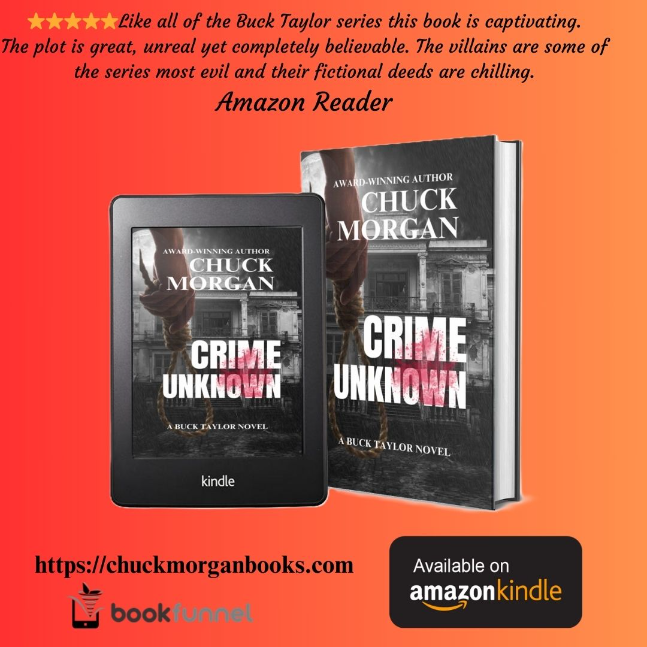
Crime Unknown, A Buck Taylor Novel by Chuck Morgan
CRIME UNKNOWN, A BUCK TAYLOR NOVEL BY CHUCK MORGAN
Reviewed by Maureen Dangarembizi for Readers' Favorite
Crime Unknown is the exciting seventh installment in the Buck Taylor series by Chuck Morgan. Agent Buck Taylor goes into the sweet little town of Copper Creek expecting to bring to light the truth behind a college suicide. As he looks into Kevin Ducette, many things don’t add up. What Buck soon finds is a rotten core at the center of Copper Creek. Evidence has been tampered with and some aspects of the investigation were not even carried out. It seems everyone is convinced the student killed himself. Unconvinced and seeing more and more discrepancies the deeper he digs. Buck realizes that a potential murder is only the tip of the iceberg compared to what is really going on in the small Colorado town.
⭐⭐⭐⭐⭐ I read Crime Unknown in one sitting. The plot is intense and the main character agent Buck Taylor is a hero like no other. This book has everything a thriller needs to be and more. I thought I knew the story at the beginning. Buck will solve a tricky murder case, I thought. But Chuck Morgan adds a twist to this story that expands it and makes it one of the most enjoyable books I’ve read in this genre. I loved that the lead was such an awesome well-rounded fellow but that he also had a support team who were just as important to the story. I’ve never read other books in this series(something I’ll have to remedy soon) but there was no problem understanding the dynamic between the characters, thus it can be read as a standalone. Fans of Jack Reacher novels will enjoy this book. I simply can’t praise Chuck Morgan and his series more. It is worth every second spent reading it.
Reviewed by Trudi LoPreto for Readers' Favorite
Crime Unknown: A Buck Taylor Novel (Book 7) is a great crime novel that moves along quickly and with great excitement to know what is coming next. The story begins on a college campus in Colorado. When a student’s suspected murder is covered up as a suicide, Buck is called in to get the facts. He is soon knee-deep in an investigation that could change the mountain town of Copper Creek forever. The local police, politicians, and rich men own the town and have complete control, but what they are controlling is what Buck must find out. He brings in his team and they find themselves not only concerned about the dead student but learn there have been too many other missing people, a doctor up to no good, one man calling all the shots. As Buck and his team dig into the facts, what they find will amaze and horrify. This is a must-read for yourself so as not to ruin the details.
⭐⭐⭐⭐⭐ Crime Unknown is much better than the usual crime novel. Buck Taylor is my new favorite crime hero. Chuck Morgan has created characters that are very real life and believable with a plot that is a sure-fire winner. This is the seventh Buck Taylor book, but it stood alone as I have never read the other books in this series (something I will most definitely fix). Crime Unknown does not fit into just the crime genre as it offers so much more. There is excitement, suspense, mystery, and surprising twists and turns throughout. I cannot urge you strongly enough not to pass up Crime Unknown. It is a five-plus star winner.
⭐⭐⭐⭐⭐Like all of the Buck Taylor series this book is captivating. The plot is great, unreal yet completely believable. The villains are some of the series most evil and their fictional deeds are chilling.
⭐⭐⭐⭐⭐I love this series. Buck Taylor and his comrades in arms are some of the most likable characters I’ve ever read.
https://www.amazon.com/dp/B08XN16J87/
Crime Conspiracy, A Buck Taylor Novel by Chuck Morgan
Available online: eBook, Audiobook, Paperback, Hard Cover, Large Print
Crime Conspiracy, A Buck Taylor Novel by Chuck Morgan
Conspiracies, dermestid beetles, infrasound weapons, and a Cold War bunker.
Colorado Bureau of Investigation Agent Buck Taylor and his team are back in the 6th novel in the award-winning CRIME series.
https://www.amazon.com/dp/B08FHD7HDK/
As the Colorado Bureau of Investigation's top agent, Buck Taylor is used to solving tough cases. But when he is tasked with solving two mysterious and high-profile crimes, he knows he's in for his biggest challenge yet. In one small town, recent college graduate Dee Highwater is celebrating her success with her Native American family when she disappears without a trace. In another town, Professor Dale Carmichael and four of his students are embarking on a research expedition in the remote Weminuche Wilderness Area to determine if “ghost” grizzlies still live in Colorado.
Buck and his partner, CBI Agent Ashley Baxter, are thrust into a dangerous conspiracy involving dermestid beetles, infrasound weapons, and a Cold War bunker. As they race against time to unravel the truth, Buck and Ashley soon realize that one of the crimes may be the perfect crime, while the other holds a dark secret that could change the course of history. With powerful emotions and heart-pounding suspense, this fast-paced investigative adventure will keep you on the edge of your seat until the very end.
Reviewed by Jack Magnus for Readers' Favorite
Crime Conspiracy: A Buck Taylor Novel is a mystery novel written by Chuck Morgan. Dee Hightower had finally finished her coursework for her degree in psychology. While most of her coursework had been completed online, she had to sit for her final exams in person at Fort Lewis College in Durango. When she was finished with her last exam, she called her husband to tell him she was on her way home. Her husband, who had fallen asleep waiting for her, woke up at 1:00 A.M., hours after she should have been home. A search party was quickly organized, but Dee seemed to have vanished off the face of the earth. She had been missing for a week when Buck Taylor got a call from Kevin Jackson, his boss and the director of the Colorado Bureau of Investigation. Ten women had disappeared in Colorado in the last four years, and the governor was involved in this one. When Buck got to the Sheriff’s Office in Montezuma County, Sheriff Reuben Garcia was waiting for him. If anyone could find Dee Hightower, Sheriff Garcia was sure Buck would be the one.
⭐⭐⭐⭐⭐Chuck Morgan’s Crime Conspiracy is the sixth book in his Buck Taylor series, but the author gives enough background information throughout the story to allow it to be enjoyed as a stand-alone novel. Morgan’s plot is thought-provoking, giving readers much to consider as Buck investigates the disappearance of Dee Hightower. The secondary plot concerning the fate of Professor Carmichael’s “ghost grizzly” survey team in the Weminuche Wilderness Area is a bonus for readers, giving them an additional mystery to solve. Morgan’s characters are well-defined and authentic, and while this was my first Buck Taylor novel, I soon felt as though Buck was an old friend. Crime Conspiracy bristles with red herrings and pesky evidence rules that are true-to-life, and I had a grand time reading it. Crime Conspiracy is most highly recommended.
Reviewed by Steven Robson for Readers' Favorite
Crime Conspiracy: A Buck Taylor Novel is Book 6 of the series by Chuck Morgan, where we team up with Colorado Bureau of Investigation’s (CBI) Buck Taylor as he is tasked with solving two most intriguing and high-profile mysteries. Dee Highwater is a Native American woman with the world at her feet, having just completed her final graduation exam at Fort Lewis College, and now drives home to her loving family in a heady haze of excited emotion. In another part of Colorado, Professor Dale Carmichael is also embarking on a most anticipated trip into the Weminuche Wilderness Area, where he is taking four of his students on a research expedition to verify whether grizzlies still remain in the area. These two disparate journeys become triggers that lead Buck and his close associate, CBI Agent Ashley Baxter (Bax,) to inexplicable mysteries, terrifying revelations, and political machinations that will hold you spellbound in the grip of this fast paced investigative adventure until the last word is revealed.
⭐⭐⭐⭐⭐I found Chuck Morgan’s Crime Conspiracy to be a wonderfully compelling read, containing a superbly crafted plot that finely balances the many facets of this complex and dramatic story. All of the characters were unique and engaging, and some were positioned nicely to build on the mystique within the story; Deputy Sheriff Scott Sage was one such player that carried this potential, which was established in a very subtle way. The thing that Crime Conspiracy does perhaps best of all is to reflect what true reality is, where there are no black or white answers; life more often than not comes in shades of gray, and this book is painted in all of the richness of that color. This is a book you can’t put down, which will entertain you on many levels, and at times make your skin crawl; the kind of book that remains in your thoughts long after you finish reading.
Check out the rest of the award-winning CRIME Series at: